
How Much Weight Loss Improves Diabetes and BP?
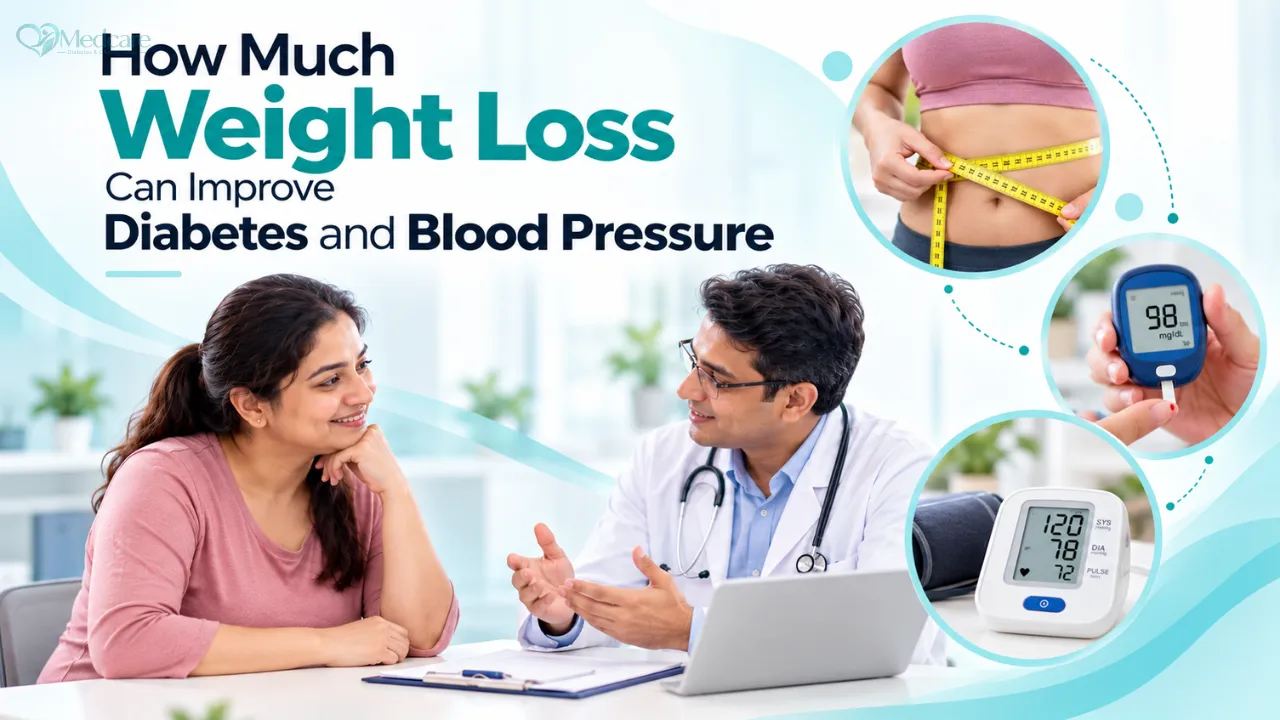
Losing about 5 percent of your body weight can already improve blood sugar, blood pressure and cholesterol. Losing around 10 percent or more often brings bigger benefits, and in some people with type 2 diabetes, larger weight loss can lead to remission. You do not need to reach an ideal weight to see real health gains.
Quick answer
- A 5 percent weight loss can lower blood sugar, HbA1c and BP.
- A 10 to 15 percent loss gives greater improvements and may reduce the need for some medicines.
- Larger, sustained weight loss, sometimes with medicines or surgery, can lead to diabetes remission in some people, especially when diabetes is recent.
What Does 5 Percent Look Like?
For someone weighing 90 kg, 5 percent is about 4.5 kg. For someone weighing 70 kg, it is about 3.5 kg. These are achievable goals for many people.
Benefits at Different Levels of Weight Loss
Around 5 percent
- Lower fasting sugar and HbA1c
- Better insulin sensitivity
- Small drop in blood pressure
- Lower triglycerides
- Reduced liver fat
Around 10 percent
- Further improvement in sugar and BP
- Better cholesterol profile
- Reduced joint pain
- Improved sleep apnea symptoms
- Some people may need fewer medicines
Around 15 percent or more
- Greater chance of type 2 diabetes remission
- Substantial improvements in BP and fatty liver
- Better quality of life
How Does Weight Loss Help?
- Reduces fat in the liver and pancreas, improving insulin function
- Lowers strain on blood vessels and the heart
- Reduces inflammation
- Improves breathing during sleep
How to Lose Weight Safely
Structured eating
Smaller portions, more vegetables and protein, fewer refined carbs and sugary drinks.
Regular activity
At least 150 minutes a week of moderate activity, plus some strength exercises.
Behaviour support
Tracking meals, setting goals and getting family support help.
Medical support
Weight-loss medicines may be considered for some people. Bariatric surgery may be an option for selected people with severe obesity.
Keeping Weight Off
Weight maintenance is often harder than weight loss. Continue healthy habits, monitor weight regularly and stay in touch with your care team.
A Caution About Medicines
If you take diabetes or BP medicines, weight loss may lower your sugar or BP. Your doctor may need to adjust doses to avoid low readings. Check with your doctor before major diet changes.
Key Takeaways
- About 5 percent weight loss already helps.
- Around 10 percent brings greater benefits.
- Larger losses may lead to diabetes remission.
- Medicines may need adjusting as you lose weight.
- Keeping weight off needs ongoing support.
Final Thoughts
You do not need dramatic weight loss to protect your health. Steady, realistic progress makes a real difference to sugar and blood pressure. For a medically supervised weight plan, you can consult Dr. Tamoghna Das, an internal medicine and cardio-diabetology specialist at Medcare Diabetes & Obesity Clinic.
This article is part of our guide to obesity treatment, written for patients and families in Bongaigaon.
FAQs
How much weight loss lowers blood sugar?
Losing about 5 percent of body weight can noticeably improve blood sugar and HbA1c. Greater weight loss often brings bigger improvements and may reduce medicine needs.
Can losing weight cure type 2 diabetes?
Some people achieve remission with significant, sustained weight loss, especially soon after diagnosis. Remission is not a cure, so regular monitoring is still needed.
How much does BP drop with weight loss?
BP often drops with weight loss, and the effect grows with more weight lost. Combined with less salt and more activity, the benefit is greater.
Do I need to reach my ideal weight to benefit?
No. Even modest weight loss improves health. Focus on steady progress and healthy habits rather than a perfect number.
Should my diabetes medicines change when I lose weight?
Possibly. As sugar and BP improve, your doctor may need to reduce some medicines to prevent low sugar or low BP. Keep your doctor informed.
Are weight-loss medicines safe?
Some weight-loss medicines are approved and effective for selected people. They have side effects and need medical supervision. Your doctor will decide if they suit you.
Sources

Medically reviewed by Dr. Tamoghna Das, MBBS, MD (Medicine) · Assam Council of Medical Registration No. 20276 · Last reviewed 14 October 2026
Medical disclaimer. This article is for general information only. It is not a diagnosis and is not a substitute for a consultation with a doctor. For advice about your own health, please book an appointment. Read our medical disclaimer.
Seek urgent care now, call 108 or 112, or go to the nearest emergency department if you have chest pain, sudden breathlessness, fainting, weakness on one side of the body, very high blood sugar with vomiting or drowsiness, repeated low blood sugar with confusion, or a foot wound with redness, swelling or fever.