
Heart health and heart risk
Heart disease often builds silently for years through high blood pressure, diabetes, high cholesterol, smoking and extra weight. At Medcare in Bongaigaon, Dr. Tamoghna Das, an MD physician with fellowship training in echocardiography, checks your heart risk, looks at the heart directly with ECG and echo when needed, and treats the causes early. The aim is to keep your heart healthy before problems begin, and to manage them well if they already have.
At a glance
- Main risk factors: high BP, diabetes, high cholesterol, smoking or tobacco, obesity, inactivity, family history of early heart disease, kidney disease
- Tests at Medcare: BP, ECG, echocardiography with strain imaging, Holter monitoring, 24-hour BP monitoring, HbA1c
- Blood tests (lab of your choice): cholesterol profile, kidney function, sugar and others as needed
- Who should be checked: adults over 40, and younger adults with diabetes, high BP, a strong family history or symptoms
- What we manage: heart risk, high BP, heart failure, palpitations, and follow-up after a heart attack or procedure
Symptoms that need a heart check
- Chest discomfort, tightness or pressure, especially on walking or climbing stairs
- Breathlessness on exertion or when lying flat
- Swelling of the feet or ankles
- Palpitations: a racing, pounding or irregular heartbeat
- Dizziness or fainting
- Unusual tiredness with activity
People with diabetes may have heart disease with mild symptoms or none at all. This is one reason Medcare checks the heart in people with long-standing diabetes.
What your care includes
- History and examination. Symptoms, family history, smoking, BP, pulse, weight, waist and signs of heart strain.
- Risk assessment. Your overall chance of a heart attack or stroke is estimated from your BP, sugar, cholesterol, age and other factors.
- Heart tests when useful. An ECG checks rhythm and signs of strain or past damage. An echo looks at the heart's size, pumping, valves and pressures. Strain imaging can pick up early changes in heart muscle function.
- Rhythm checks. If you have palpitations or fainting, a patch Holter records your heartbeat for days.
- Treatment. BP, sugar and cholesterol control, help to stop tobacco, weight and activity plans, and medicines when needed.
- When you need more. If you need a test or procedure not available at Medcare, such as a treadmill test, angiography or a pacemaker, Dr. Das explains why and helps you decide where to go. You choose the hospital.
- History and examination. Symptoms, family history, smoking, BP, pulse, weight, waist and signs of heart strain.
- Risk assessment. Your overall chance of a heart attack or stroke is estimated from your BP, sugar, cholesterol, age and other factors.
- Heart tests when useful. An ECG checks rhythm and signs of strain or past damage. An echo looks at the heart's size, pumping, valves and pressures. Strain imaging can pick up early changes in heart muscle function.
- Rhythm checks. If you have palpitations or fainting, a patch Holter records your heartbeat for days.
- Treatment. BP, sugar and cholesterol control, help to stop tobacco, weight and activity plans, and medicines when needed.
- When you need more. If you need a test or procedure not available at Medcare, such as a treadmill test, angiography or a pacemaker, Dr. Das explains why and helps you decide where to go. You choose the hospital.
Heart care sub-pages


Protecting your heart day to day
- Know your numbers: BP, sugar, cholesterol, weight and waist
- Use less salt: avoid adding salt at the table and limit pickles, papad, dried fish and salty snacks
- Stop smoking, gutkha, khaini and other tobacco
- Walk briskly on most days
- Sleep 7 hours and get snoring checked
- Take your medicines every day, even when you feel well
When to see a doctor urgently
Call 108 or 112 straight away for chest pain or pressure lasting more than a few minutes, chest pain with sweating, breathlessness or vomiting, sudden severe breathlessness, fainting, or sudden weakness of the face, arm or leg. Do not drive yourself and do not wait for a clinic appointment.
FAQs
I have no symptoms. Do I still need a heart check?
If you are over 40, or younger with diabetes, high BP, high cholesterol, tobacco use or a family history of early heart disease, yes. Heart disease often develops without symptoms. A simple risk check, and an ECG or echo when needed, can find problems early when they are easier to treat.
What is the difference between an ECG and an echo?
An ECG records the heart's electrical activity in a few minutes. It shows rhythm problems and some signs of strain or past damage. An echo is an ultrasound scan that shows the heart's structure, pumping strength, valves and pressures. They answer different questions, so sometimes both are needed.
Is Medcare a cardiology clinic?
No. Medcare is a physician-led clinic. Dr. Das is an MD in Medicine with fellowship training in echocardiography. He manages heart risk, high BP and heart failure and performs echo tests. For procedures such as angiography, he will explain your options.
Can diabetes affect the heart even if sugar is controlled?
Yes. Diabetes raises heart risk, and the risk is higher still with high BP, high cholesterol, smoking or kidney disease. Controlling all of these together, not only sugar, gives the heart the strongest protection. Echo with strain imaging can show early heart muscle changes in diabetes.
Which cholesterol number matters most?
LDL cholesterol, often called "bad cholesterol", is the main target. Your target depends on your overall risk: people with diabetes, past heart attack or stroke need lower levels. Dr. Das will explain your target based on your full risk picture.
Sources
- European Society of Cardiology, Guidelines on cardiovascular disease prevention (current edition)
- Lipid Association of India, expert consensus statements
Related care
From the Health Library
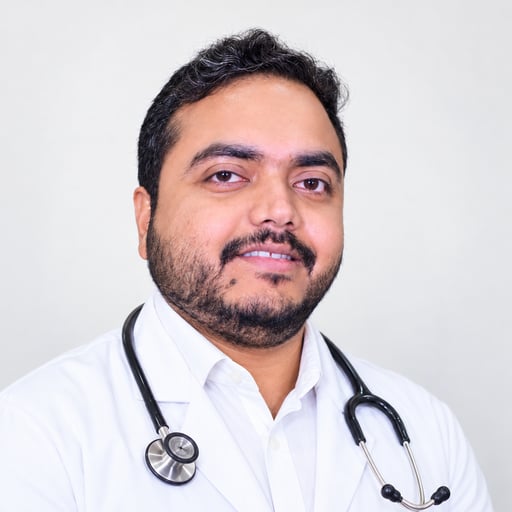
Medically reviewed by Dr. Tamoghna Das, MBBS, MD (Medicine) · Assam Council of Medical Registration No. 20276 · Last reviewed 3 October 2026
Book a visit with Dr. Tamoghna Das
Call 60031 21297 or send a WhatsApp message. We confirm your time within 30 to 60 minutes during clinic hours.