HbA1c vs Fasting Blood Sugar: Which Test Is Better?
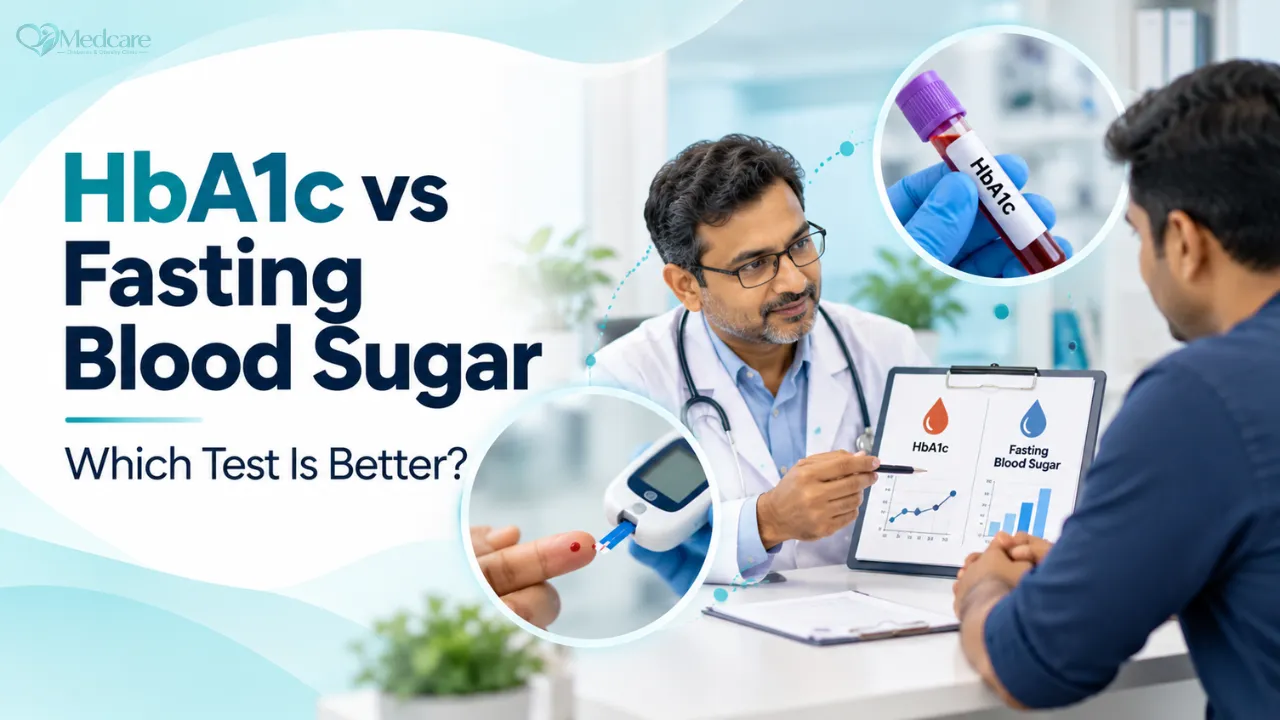
Both tests help detect and monitor diabetes, but they measure different things. Understanding the difference helps you read your reports with more confidence.
Quick answer
- Fasting blood sugar shows your sugar level at one moment after an overnight fast.
- HbA1c reflects your average blood sugar over roughly the past three months and does not need fasting.
- Neither is simply better.
- Doctors often use both, along with symptoms and other tests.
What Is Fasting Blood Sugar?
You do not eat or drink anything except water for at least eight hours, then a blood sample is taken. It shows how well your body manages sugar overnight.
What Is HbA1c?
HbA1c measures the share of haemoglobin in red blood cells that has sugar attached. Because red blood cells live for around three months, the result reflects your average control over that period.
Key Differences
- Fasting sugar is a snapshot, HbA1c is an average
- Fasting sugar needs preparation, HbA1c does not
- Fasting sugar can vary day to day, HbA1c is more stable
- HbA1c can be affected by anaemia and some blood conditions
- Fasting sugar is useful for adjusting daily treatment
Commonly Used Cut-offs
- Normal fasting sugar is below 100 mg/dL
- Prediabetes range is 100 to 125 mg/dL
- Diabetes is 126 mg/dL or higher on repeat testing
- HbA1c below 5.7 percent is normal, 5.7 to 6.4 percent is prediabetes and 6.5 percent or higher suggests diabetes
Your doctor will interpret results in your own context.
When Might One Test Mislead?
Anaemia, recent blood loss or certain haemoglobin variants can make HbA1c less reliable. A single fasting reading can be affected by a poor night, illness or stress.
So Which Should You Choose?
Use both as your doctor advises. HbA1c is convenient for long-term tracking. Fasting and post-meal sugars help fine-tune food and medicines.
Key Takeaways
- Fasting sugar is a snapshot, HbA1c is a three-month average.
- Both are used to diagnose and monitor diabetes.
- Anaemia can affect HbA1c accuracy.
- Home glucose readings and lab tests work together.
- Your doctor decides which tests you need and how often.
Final Thoughts
A single number rarely tells the whole story. Looking at both tests together gives a clearer picture. For diabetes testing and follow-up, you can consult Dr. Tamoghna Das, an internal medicine and cardio-diabetology specialist at Medcare Diabetes & Obesity Clinic.
This article is part of our guide to type 2 diabetes symptoms and treatment, written for patients and families in Bongaigaon.
FAQs
Is HbA1c more accurate than fasting sugar?
It is more stable because it averages several weeks, but it is not always more accurate. Conditions affecting red blood cells can distort it.
Do I need to fast for an HbA1c test?
No. HbA1c can be done at any time of day without fasting.
Can my HbA1c be normal while my fasting sugar is high?
Yes, this can happen, especially if sugar is raised only at certain times of day or if another condition affects the HbA1c result. Your doctor can explain the difference.
How often should HbA1c be checked?
People with diabetes are commonly tested every three to six months, depending on control. Your doctor will set the schedule.
Does one high fasting reading mean I have diabetes?
Not necessarily. Diagnosis usually needs a repeat test or a second confirming test.
Can I improve HbA1c in a few weeks?
Changes in food, activity and medicines can lower sugar within weeks, but HbA1c reflects about three months, so full change takes time.
Sources

Medically reviewed by Dr. Tamoghna Das, MBBS, MD (Medicine) · Assam Council of Medical Registration No. 20276 · Last reviewed 1 October 2026
Medical disclaimer. This article is for general information only. It is not a diagnosis and is not a substitute for a consultation with a doctor. For advice about your own health, please book an appointment. Read our medical disclaimer.
Seek urgent care now, call 108 or 112, or go to the nearest emergency department if you have chest pain, sudden breathlessness, fainting, weakness on one side of the body, very high blood sugar with vomiting or drowsiness, repeated low blood sugar with confusion, or a foot wound with redness, swelling or fever.