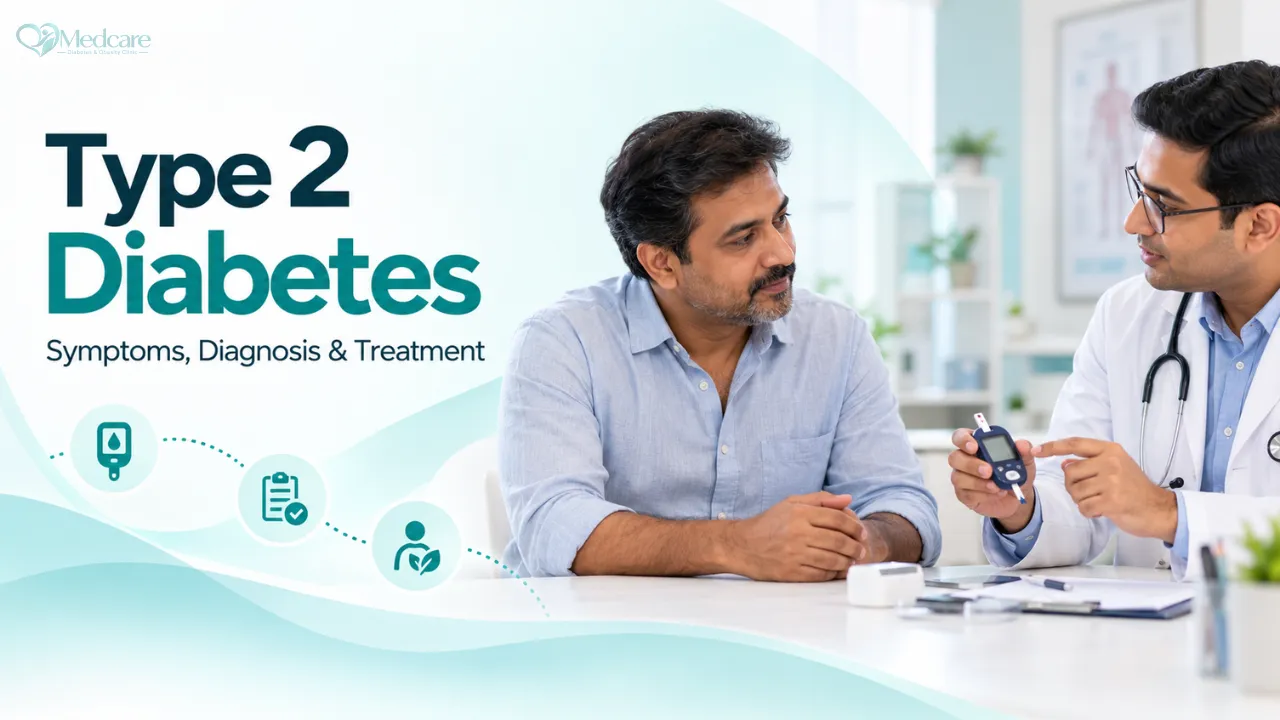
Type 2 Diabetes: Symptoms, Diagnosis & Treatment
In brief
- Type 2 diabetes is a long-term condition in which the body does not use insulin effectively and, over time, may not produce enough insulin to keep blood sugar under control.
- Common symptoms include increased thirst, frequent urination, tiredness, blurred vision, slow-healing wounds and unexplained weight loss. Some people have no symptoms, especially in the early stages.
- Diabetes can be diagnosed using HbA1c, fasting blood glucose, a 2-hour oral glucose tolerance test, or a random blood glucose test when typical symptoms are present. A diagnosis usually needs confirmation if there is no clear hyperglycaemia.
- Treatment usually combines food choices, physical activity, weight management where appropriate, medicines and regular monitoring. The choice of medicine depends on blood sugar as well as heart, kidney, weight and other health factors.
- An HbA1c below 7% is an appropriate goal for many non-pregnant adults, but your personal target may be different depending on your age, health, medicines and risk of low blood sugar.
- Long-term diabetes care is not only about sugar. Heart health, blood pressure, cholesterol, kidneys, eyes, nerves and feet also need attention.
Type 2 diabetes is a condition in which blood sugar stays too high because the body becomes less responsive to insulin and the pancreas may gradually lose its ability to produce enough insulin. It can develop slowly, and some people discover it during a routine blood test rather than because of symptoms. The aim of treatment is to keep blood sugar in a safe range while also reducing the risk of heart, kidney, eye, nerve and foot complications.
What is type 2 diabetes?
Type 2 diabetes is the most common form of diabetes. It develops when the body cannot use insulin effectively, a problem known as insulin resistance, and the insulin-producing cells in the pancreas gradually struggle to meet the body's needs.
Insulin is a hormone that helps glucose move from the bloodstream into cells, where it can be used for energy. When insulin does not work effectively, glucose remains in the blood.
Over time, persistently high blood sugar can affect blood vessels and nerves. This is why diabetes can affect several parts of the body, including the heart, kidneys, eyes and feet.
Type 2 diabetes is usually a long-term condition. However, blood sugar can often be brought under good control with the right combination of lifestyle measures, medicines and follow-up.
Some people may achieve diabetes remission, meaning blood sugar returns below the diabetes range without glucose-lowering medicines for a sustained period. Remission is not the same as a permanent cure, and regular follow-up remains important.
Why does type 2 diabetes happen?
Type 2 diabetes usually develops from a combination of insulin resistance, reduced insulin production and inherited or environmental factors.
Factors that can increase the likelihood include:
- Family history of type 2 diabetes
- Excess body weight or obesity
- Low physical activity
- Increasing age
- Previous gestational diabetes
- High blood pressure
- Abnormal cholesterol or triglycerides
- Polycystic ovary syndrome
- Certain medicines or medical conditions
- A history of prediabetes
Weight is only one part of the picture. A person who is not overweight can also develop type 2 diabetes.
Your risk can also change with age and other health conditions. This is why screening can be useful even when you feel well.
What are the symptoms of type 2 diabetes?
Type 2 diabetes may cause symptoms when blood sugar becomes high, but many people have few or no symptoms at first.
Possible symptoms include:
- Passing urine more often, especially at night
- Feeling unusually thirsty
- Increased hunger
- Tiredness or low energy
- Blurred vision
- Unexplained weight loss
- Slow healing of cuts or wounds
- Repeated skin or urinary infections
- Itching, particularly around the genital area
- Tingling, burning or numbness in the feet or hands
Symptoms can develop gradually. Some people may attribute tiredness or frequent urination to age, work, sleep problems or drinking more fluids.
This is one reason a blood test can sometimes identify diabetes before obvious symptoms appear.
If diabetes runs in your family or you have risk factors such as excess weight, high blood pressure or previous prediabetes, ask your doctor whether you need blood sugar testing even if you feel well.
Can you have type 2 diabetes without symptoms?
Yes. Many people with type 2 diabetes do not notice symptoms when the condition is developing.
This can allow high blood sugar to continue for some time before diagnosis. A routine health check-up may therefore identify diabetes in someone who feels completely well.
Do not rely on symptoms alone to decide whether you have diabetes. Blood tests are needed for diagnosis.
How is type 2 diabetes diagnosed?
Type 2 diabetes can be diagnosed using HbA1c, fasting plasma glucose, a 2-hour glucose test during an oral glucose tolerance test, or a random plasma glucose test when classic symptoms of high blood sugar are present.
The commonly used diagnostic thresholds for non-pregnant adults are:
| Test | Diabetes range |
|---|---|
| HbA1c | 6.5% or more |
| Fasting plasma glucose | 126 mg/dL or more |
| 2-hour glucose during 75 g OGTT | 200 mg/dL or more |
| Random plasma glucose with classic symptoms | 200 mg/dL or more |
When a person does not have clear symptoms of hyperglycaemia, an abnormal result generally needs confirmation with repeat or additional testing.
What is HbA1c?
HbA1c, also called glycated haemoglobin, gives an estimate of your average blood sugar exposure over roughly the previous 2 to 3 months.
It does not require fasting, which makes it convenient for many patients. It is also useful for monitoring diabetes after diagnosis.
HbA1c is not a perfect test for everyone. Anaemia, some haemoglobin variants, altered red blood cell turnover, kidney disease and other conditions can affect the relationship between HbA1c and actual blood glucose.
This matters in parts of Northeast India where haemoglobin variants may be encountered. If your HbA1c result does not match your home or laboratory glucose readings, discuss the difference with your doctor rather than assuming one result is automatically correct.
What is fasting blood glucose?
Fasting blood glucose measures blood sugar after you have had no caloric intake for at least 8 hours.
It gives a picture of your blood sugar at that particular time. Unlike HbA1c, it does not represent your average glucose over several months.
What is an oral glucose tolerance test?
An oral glucose tolerance test, or OGTT, checks how your body handles a measured glucose drink.
A blood sample is taken after fasting and another sample is taken 2 hours after the glucose drink. It can identify abnormal glucose handling that may not be obvious from fasting glucose alone.
What should your blood sugar and HbA1c target be?
There is no single target that is suitable for every person with diabetes.
For many non-pregnant adults, an HbA1c target of less than 7% is appropriate. Some people may have a lower target, while others may need a less strict target because of frailty, other illnesses, treatment burden or the risk of low blood sugar.
Your doctor may also consider fasting and post-meal glucose readings, symptoms of low blood sugar, medicines, age, kidney function and other health conditions.
The goal is not simply to achieve the lowest possible number. The goal is safe, sustainable control that reduces complications without causing harmful low blood sugar.
How is type 2 diabetes treated?
Type 2 diabetes treatment usually has several parts:
- Healthy eating
- Regular physical activity
- Weight management when appropriate
- Diabetes medicines when needed
- Blood glucose monitoring when indicated
- Blood pressure and cholesterol management
- Screening for diabetes complications
- Regular follow-up
The exact treatment plan should be personalised.
Food and diabetes
You do not necessarily need to stop eating rice, roti or other traditional foods because you have diabetes.
The focus is on portion size, meal balance, carbohydrate quality, vegetables, protein, fibre and overall calorie intake.
For an Indian diet, practical changes may include:
- Keep rice or roti portions appropriate for your needs.
- Include vegetables with meals.
- Add protein such as dal, fish, eggs, curd or other suitable sources.
- Limit sugary drinks, sweet tea, sweets and frequent desserts.
- Be careful with large portions during festivals and family functions.
- Choose whole or minimally processed foods more often.
- Avoid assuming that a food labelled "sugar-free" can be eaten without limits.
For someone accustomed to rice-based meals, completely removing rice may not be necessary. A better plan is one you can follow consistently.
Physical activity
Regular physical activity helps the body use insulin more effectively and can support blood sugar, blood pressure, cholesterol and weight management.
Walking is a useful starting point for many people. Depending on your health and fitness, your doctor may also recommend resistance exercises and other forms of activity.
If you have heart disease, significant foot problems, severe breathlessness or other medical conditions, ask your doctor what level of activity is appropriate before starting a new exercise programme.
Weight management
For people with overweight or obesity, even a modest and sustained reduction in weight can improve several metabolic factors.
Weight management should not be treated as a test of willpower. Sleep, medicines, appetite, stress, activity, food environment and medical conditions can all influence weight.
Some people may benefit from structured medical weight management or prescription medicines. These decisions should be made with a doctor.
Which medicines are used for type 2 diabetes?
There are several classes of diabetes medicines. The choice depends on your glucose levels, weight, kidney function, heart health, risk of low blood sugar, other medicines, cost and personal preferences.
Metformin
Metformin is a commonly used medicine for type 2 diabetes. It helps reduce glucose production by the liver and improves insulin sensitivity.
Common side effects include stomach upset, loose stools and nausea, particularly when treatment is started or adjusted. Long-term use can also be associated with vitamin B12 deficiency in some people.
Metformin is not suitable for everyone. Kidney function and other medical factors need to be considered.
GLP-1 receptor agonists
GLP-1 receptor agonists are medicines that act on pathways involved in blood sugar regulation and appetite. Some can also support weight loss and have cardiovascular benefits in appropriate patients.
They may cause gastrointestinal symptoms such as nausea, vomiting, diarrhoea or constipation.
These medicines are prescription treatments. The choice of medicine and whether it is suitable for you should be decided by your doctor.
SGLT2 inhibitors
SGLT2 inhibitors help the kidneys remove some glucose through the urine.
Certain medicines in this group can provide heart and kidney benefits in people with appropriate cardiovascular or kidney risk, sometimes independent of the person's HbA1c level.
They can have side effects, including genital fungal infections and dehydration-related problems in some people. Rarely, diabetic ketoacidosis can occur, including situations where blood glucose is not extremely high.
Insulin
Some people with type 2 diabetes need insulin.
This may happen when blood sugar is very high, when the pancreas is no longer producing enough insulin, during certain illnesses or around specific medical situations. In some cases insulin may be used temporarily. In others, it becomes part of long-term treatment.
Starting insulin does not mean you have failed. It means your body needs additional insulin support.
Never start, stop or change insulin doses without medical guidance.
Does everyone with type 2 diabetes need medicine?
No.
Some people with newly diagnosed diabetes may initially achieve adequate control through food changes, physical activity, weight management and close monitoring. Others need medicine from the beginning because their blood sugar is significantly elevated or because of other health risks.
Treatment can also change over time. Type 2 diabetes is progressive for many people, so needing an additional medicine later does not mean that you have done something wrong.
How do doctors choose diabetes medicines?
Modern diabetes treatment is increasingly based on the person's overall health rather than blood sugar alone.
A doctor may consider:
- HbA1c and glucose levels
- Weight and appetite
- Heart disease or cardiovascular risk
- Heart failure
- Kidney disease
- Fatty liver or other metabolic conditions
- Risk of low blood sugar
- Other medicines
- Side effects
- Cost and access
- Your preferences
For people with type 2 diabetes who have established cardiovascular disease or high cardiovascular risk, certain GLP-1 receptor agonists and SGLT2 inhibitors may be preferred because of demonstrated cardiovascular benefits. For people with heart failure or chronic kidney disease, the choice of medicine may also be influenced by these conditions.
This is why it is not useful to choose a diabetes medicine simply because it worked for a friend or relative.
How often should HbA1c be checked?
HbA1c is generally checked regularly after diagnosis.
For people whose diabetes is not at goal or whose treatment is changing, testing about every 3 months is commonly used to assess progress. People who have stable diabetes and are meeting their goals may need testing less often, such as twice a year.
The exact schedule depends on your treatment and health status.
At Medcare, HbA1c testing is available in-house, with the result usually ready before the patient leaves.
What complications can type 2 diabetes cause?
High blood sugar over time can damage blood vessels and nerves. Diabetes can therefore affect several organs.
Heart and blood vessels
People with diabetes have increased cardiovascular risk. Blood pressure, cholesterol, smoking, weight and blood sugar can all contribute to this risk.
Chest pressure, chest pain, unusual breathlessness, sudden sweating or other concerning symptoms should not be ignored.
Diabetes care therefore includes more than checking HbA1c. Cardiovascular risk needs attention as part of long-term treatment.
Kidneys
Diabetes can damage the small blood vessels in the kidneys and cause diabetic kidney disease.
Kidney health is assessed using tests such as estimated glomerular filtration rate, or eGFR, and urine albumin-to-creatinine ratio, or UACR.
Current ADA guidance recommends assessing UACR and eGFR at least annually in people with type 2 diabetes, regardless of treatment.
Eyes
Diabetes can damage the blood vessels supplying the retina, the light-sensitive tissue at the back of the eye.
Regular eye examinations can help detect diabetic retinopathy before vision becomes noticeably affected.
Do not wait for blurred vision before discussing eye screening with your doctor.
Nerves
Diabetic neuropathy is nerve damage related to diabetes.
It can cause:
- Burning
- Tingling
- Numbness
- Reduced sensation
- Pain
- Increased risk of unnoticed injuries
Peripheral neuropathy assessment is recommended from the time of diagnosis of type 2 diabetes and at least annually thereafter.
Feet
Reduced sensation and poor circulation can make small foot injuries harder to notice or heal.
Check your feet regularly, especially if you have numbness.
Seek medical attention promptly for redness, warmth, swelling, discharge, a wound that is not healing, blackened skin or a new ulcer.
A diabetic foot check is available at Medcare.
What should you monitor if you have type 2 diabetes?
Long-term diabetes care usually includes more than one number.
Depending on your situation, monitoring may include:
| Area | What may be checked |
|---|---|
| Blood sugar | Fasting, post-meal or other glucose readings |
| Long-term glucose | HbA1c |
| Blood pressure | Clinic and sometimes home BP |
| Cholesterol | Lipid profile |
| Kidneys | eGFR and urine albumin |
| Eyes | Retinal or dilated eye examination |
| Nerves | Neuropathy assessment |
| Feet | Foot examination |
| Weight | Weight and sometimes waist measurement |
| Heart | Assessment based on symptoms and cardiovascular risk |
Not every test is needed at every visit. Your doctor will decide the appropriate schedule based on your individual risk.
What can you do at home to control type 2 diabetes?
Long-term control comes from small decisions repeated over time.
Build meals you can maintain
Rather than following a very restrictive diet for a few weeks, work towards a meal pattern that fits your normal life.
If rice is a regular part of your diet, focus on sensible portions and balance the meal with vegetables and protein.
Keep moving
Regular walking, household activity, field or garden work and planned exercise can all contribute to physical activity.
Try to avoid sitting for very long periods without movement.
Take medicines as prescribed
Do not stop diabetes medicines simply because your blood sugar improves.
An improved reading may mean the treatment is working.
If a medicine causes side effects, speak with your doctor rather than stopping it on your own.
Monitor your feet
Look at your feet regularly for cuts, blisters, redness, swelling or changes in skin colour.
If you have reduced sensation, do not rely only on pain to tell you that an injury has occurred.
Keep appointments
Diabetes is easier to manage when problems are identified early.
Bring your recent reports and medication list to appointments. If you check blood sugar at home, keep a record of readings that can help your doctor understand patterns.
Instead of trying to change everything at once, choose 1 or 2 practical changes that you can maintain for the next few weeks and review them with your doctor.
Can type 2 diabetes be reversed?
The word "reversed" can be misleading.
Some people with type 2 diabetes can achieve remission, particularly after significant and sustained changes in weight and metabolic health. Remission means blood glucose returns to the non-diabetes range without glucose-lowering medicines for a defined period.
It does not mean the underlying tendency has permanently disappeared.
Blood sugar can rise again, particularly if weight is regained or the disease progresses. Continued monitoring is therefore important even during remission.
When should you see a doctor?
You should arrange a medical assessment if you have symptoms such as:
- Frequent urination and excessive thirst
- Unexplained weight loss
- Persistent tiredness
- Recurrent infections
- Blurred vision
- A blood sugar result that is repeatedly high
- An HbA1c in the diabetes range
- A previous diagnosis of prediabetes with worsening results
You should also discuss diabetes screening if you have several risk factors, even if you feel well.
When is diabetes an emergency?
Very high blood sugar can sometimes lead to serious metabolic problems.
Seek urgent medical care if high blood sugar is accompanied by severe vomiting, marked dehydration, confusion, difficulty breathing, extreme weakness or reduced consciousness.
For severe or rapidly worsening symptoms, call 108 or 112.
At Medcare
At Medcare Diabetes & Obesity Clinic in North Bongaigaon, Dr. Tamoghna Das approaches diabetes as part of a person's wider health rather than looking at blood sugar alone. Blood pressure, weight, heart health, thyroid problems, sleep and diabetes complications may all be considered together.
Medcare has in-house HbA1c testing, ECG, echocardiography with strain imaging, Holter monitoring, 24-hour ambulatory BP, body composition analysis and diabetic foot checks.
Key takeaways
- Type 2 diabetes can develop slowly and may cause no obvious symptoms.
- HbA1c, fasting glucose, OGTT and selected random glucose tests can be used for diagnosis.
- An HbA1c of 6.5% or more is in the diabetes range, but diagnosis generally needs confirmation when there is no clear hyperglycaemia.
- For many adults, an HbA1c below 7% is a reasonable treatment goal, but targets should be individualised.
- Treatment may include food changes, physical activity, weight management, tablets, injectable medicines or insulin.
- Diabetes management should also address blood pressure, cholesterol, heart health, kidney function, eyes, nerves and feet.
- Regular follow-up helps identify complications early and allows treatment to change as your needs change.
FAQs
What are the first symptoms of type 2 diabetes?
Common early symptoms include increased thirst, frequent urination, tiredness, blurred vision, increased hunger and unexplained weight loss. Some people have no symptoms at all. Because type 2 diabetes can remain unnoticed, a blood test is more reliable than symptoms for finding the condition.
Can I eat rice if I have type 2 diabetes?
Yes. Rice does not automatically need to be completely removed from your diet. The portion, type of rice, overall meal and your individual glucose response matter. A balanced meal with vegetables and protein and a sensible rice portion may be easier to maintain than an extremely restrictive diet.
Is an HbA1c of 6.5% diabetes?
Yes. An HbA1c of 6.5% or more is within the diabetes diagnostic range when an appropriate laboratory test is used. If you do not have clear symptoms of high blood sugar, the result usually needs confirmation with repeat or additional testing before a diagnosis is established.
Does everyone with type 2 diabetes need insulin?
No. Many people can manage type 2 diabetes with lifestyle measures and non-insulin medicines. Insulin may be needed when blood sugar is very high, insulin production has become inadequate, or during certain medical situations. Starting insulin does not mean that a person has failed to manage diabetes.
Can type 2 diabetes go into remission?
Yes, some people can achieve remission, meaning their blood sugar returns below the diabetes range without glucose-lowering medicines for a sustained period. Remission is not the same as a permanent cure. Blood sugar can rise again, so continued monitoring and healthy habits remain important.
What tests should I have regularly if I have type 2 diabetes?
Regular diabetes care may include HbA1c, blood pressure and cholesterol assessment, kidney tests such as eGFR and urine albumin, eye examinations, neuropathy assessment and foot checks. The exact schedule depends on your health and treatment. Kidney function and urine albumin are generally assessed at least annually in people with type 2 diabetes.
Sources

Medically reviewed by Dr. Tamoghna Das, MBBS, MD (Medicine) · Assam Council of Medical Registration No. 20276 · Last reviewed 1 October 2026
Medical disclaimer. This article is for general information only. It is not a diagnosis and is not a substitute for a consultation with a doctor. For advice about your own health, please book an appointment. Read our medical disclaimer.
Seek urgent care now, call 108 or 112, or go to the nearest emergency department if you have chest pain, sudden breathlessness, fainting, weakness on one side of the body, very high blood sugar with vomiting or drowsiness, repeated low blood sugar with confusion, or a foot wound with redness, swelling or fever.