How to Lower LDL Cholesterol With Diet and Lifestyle
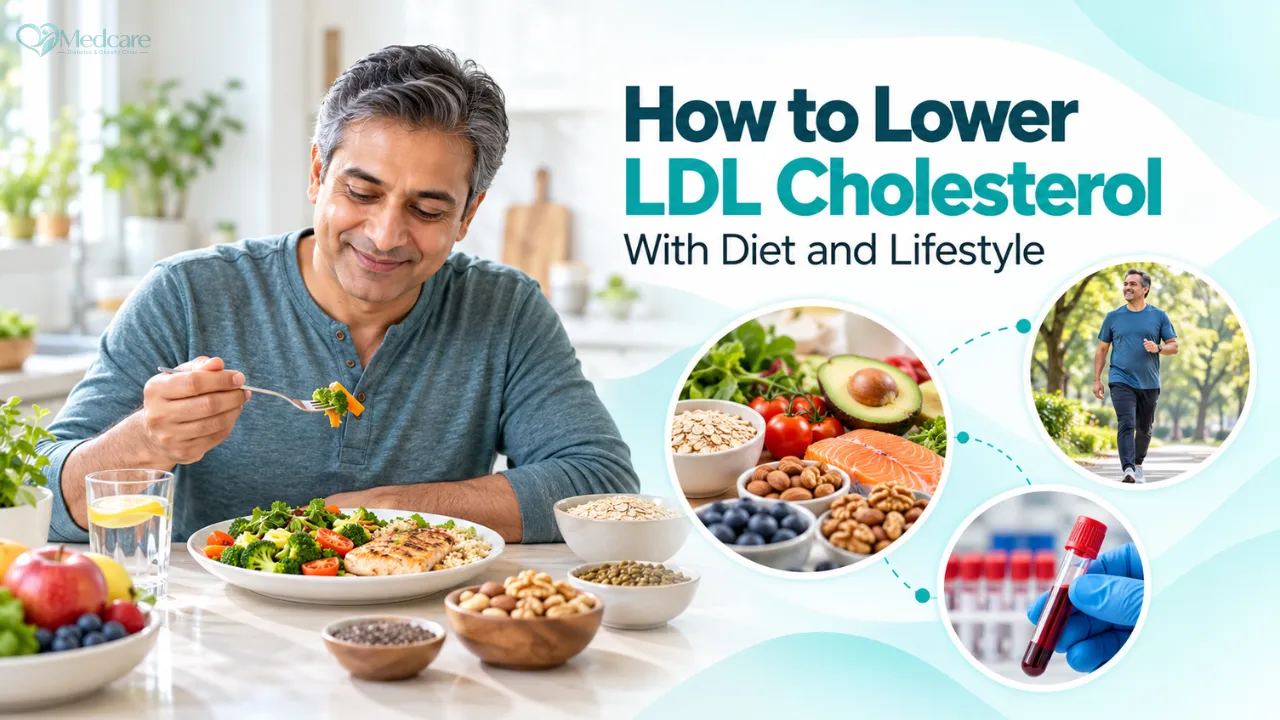
You can lower LDL cholesterol by reducing saturated and trans fats, eating more soluble fibre, choosing healthy fats, staying active, losing excess weight and stopping smoking. These changes can lower LDL meaningfully, especially when combined. People at higher heart risk may still need medicines, but lifestyle changes make treatment more effective.
Quick answer
- To lower LDL: cut down on ghee, butter, full-fat dairy, red meat, fried foods and bakery items; avoid vanaspati and trans fats; eat more oats, pulses, vegetables, fruits, nuts and seeds; use healthy oils in small amounts; exercise regularly; and maintain a healthy weight.
- Check your lipid profile after a few months to track progress.
Foods to Limit
Saturated fats
- Ghee and butter in large amounts
- Full-fat milk, cream and paneer in excess
- Red and processed meats
- Coconut oil and palm oil in large amounts
Trans fats
- Vanaspati and partially hydrogenated oils
- Bakery items like biscuits, puffs and cakes
- Deep-fried street snacks such as samosas and pakoras
Refined carbs
- Maida, white bread and sweets, which raise triglycerides and affect overall lipid health
Foods to Add
Soluble fibre
- Oats and barley
- Pulses, rajma, chana and moong
- Vegetables like okra, brinjal and beans
- Fruits like apples, guava and citrus
Healthy fats
- Mustard oil, groundnut oil or rice bran oil in moderation
- Nuts like almonds and walnuts in small portions
- Seeds like flaxseed and chia
Omega-3 sources
- Fish such as rohu, salmon or mackerel if you eat fish
- Flaxseed and walnuts for vegetarians
Plant sterols
Found in small amounts in nuts, seeds and whole grains.
Lifestyle Changes
Exercise regularly
Aim for at least 150 minutes of moderate activity a week, like brisk walking or cycling.
Lose excess weight
Even a small weight loss can improve LDL and triglycerides.
Stop smoking
Smoking lowers HDL and damages arteries.
Limit alcohol
Alcohol raises triglycerides and adds calories.
Manage stress and sleep
Good sleep and stress management support heart health.
How Much Can Diet Lower LDL?
Diet and lifestyle changes can lower LDL by a meaningful amount, though results vary from person to person. Genetics also play a role, so some people still need medicines.
When Are Medicines Needed?
If LDL remains above your target despite lifestyle changes, or you have high heart risk, your doctor may prescribe statins or other medicines.
Key Takeaways
- Limit saturated and trans fats.
- Add soluble fibre and healthy fats.
- Exercise at least 150 minutes a week.
- Lose excess weight and stop smoking.
- Medicines may still be needed for high-risk people.
Final Thoughts
Small, consistent changes to your plate and routine can make a real difference to cholesterol. Your heart benefits every time you choose a healthier option. For personalised lipid and lifestyle advice, you can consult Dr. Tamoghna Das, an internal medicine and cardio-diabetology specialist at Medcare Diabetes & Obesity Clinic.
This article is part of our guide to high cholesterol, written for patients and families in Bongaigaon.
FAQs
Can I lower LDL without medicine?
For mild elevations, diet and lifestyle changes may be enough. People with diabetes, heart disease or very high LDL often need medicines along with lifestyle changes.
Is ghee bad for cholesterol?
Ghee is high in saturated fat. Small amounts may fit into a balanced diet, but large or frequent use can raise LDL. Moderation is key.
Which cooking oil is best for cholesterol?
Oils like mustard, groundnut, rice bran and olive oil contain healthier fats. Use them in small amounts and rotate oils. Avoid vanaspati and reused frying oil.
Do eggs raise cholesterol?
For most people, moderate egg consumption has a small effect on blood cholesterol. If you have diabetes or high LDL, ask your doctor about suitable portions.
How long does it take to lower LDL with diet?
Changes may show in about 6 to 12 weeks. Repeat your lipid profile after a few months to see progress.
Does exercise lower LDL?
Exercise has a modest effect on LDL but raises HDL and lowers triglycerides. Combined with diet and weight loss, it improves overall heart health.
Sources
Sources
- NHS: High cholesterol
- NICE guideline CG181: Cardiovascular risk and lipid modification
- [WHO fact sheet: Cardiovascular diseases](https://www.who.int/news-room/fact-sheets/detail/cardiovascular-diseases-(cvds))

Medically reviewed by Dr. Tamoghna Das, MBBS, MD (Medicine) · Assam Council of Medical Registration No. 20276 · Last reviewed 13 October 2026
Medical disclaimer. This article is for general information only. It is not a diagnosis and is not a substitute for a consultation with a doctor. For advice about your own health, please book an appointment. Read our medical disclaimer.
Seek urgent care now, call 108 or 112, or go to the nearest emergency department if you have chest pain, sudden breathlessness, fainting, weakness on one side of the body, very high blood sugar with vomiting or drowsiness, repeated low blood sugar with confusion, or a foot wound with redness, swelling or fever.