Why Diabetes Increases the Risk of Heart Attack
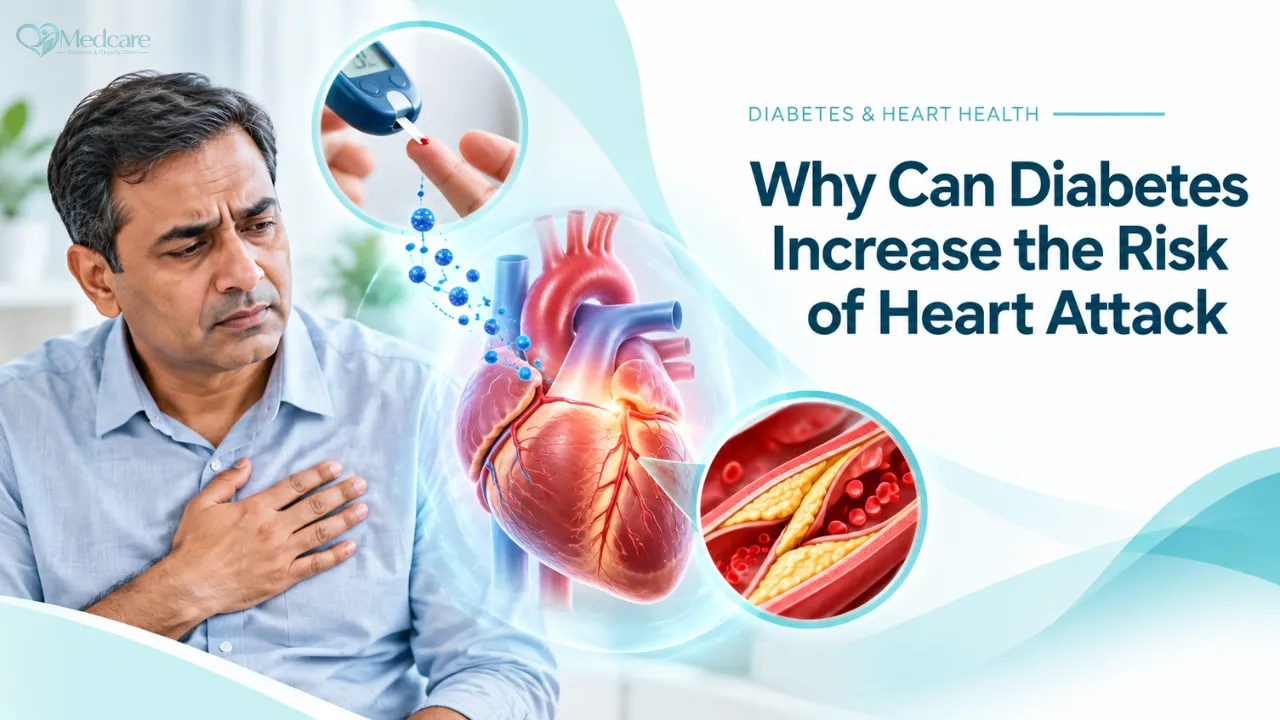
Diabetes increases the risk of heart attack because high blood sugar damages the inner lining of blood vessels over time, making it easier for fatty plaques to build up in the arteries that supply the heart. Diabetes also often comes with high blood pressure, abnormal cholesterol, excess weight and inflammation, which together raise cardiovascular risk further.
Quick answer
- People with diabetes have a higher risk of heart disease because of blood vessel damage from high sugar, faster plaque buildup, a tendency for blood to clot more easily and frequent coexisting risk factors like hypertension and high cholesterol.
- Controlling sugar, BP and cholesterol, stopping smoking and staying active can significantly lower this risk.
How Does High Sugar Affect Blood Vessels?
Damage to the vessel lining
High glucose harms the endothelium, the thin inner layer of arteries. This makes arteries stiffer and less able to widen.
Plaque buildup
Damaged vessels allow cholesterol and inflammatory cells to collect, forming plaques. This process is called atherosclerosis.
Higher clotting tendency
Diabetes can make blood more likely to clot. If a plaque cracks, a clot can block the artery and cause a heart attack.
Inflammation
Ongoing low-grade inflammation in diabetes speeds up artery damage.
Other Risk Factors That Add Up
- High blood pressure
- High LDL cholesterol and triglycerides
- Low HDL cholesterol
- Excess belly fat
- Smoking or tobacco use
- Physical inactivity
- Kidney disease
- Family history of early heart disease
Many people with type 2 diabetes have several of these at once.
Why Can Symptoms Be Different?
Diabetes can affect nerves, so some people have less typical heart attack symptoms. Instead of classic chest pain, they may feel breathlessness, tiredness, sweating, nausea or discomfort in the jaw, arm or upper abdomen.
How Can You Lower Your Risk?
- Keep blood sugar and HbA1c within your target
- Control blood pressure
- Manage cholesterol, often with statins when advised
- Stop smoking and avoid tobacco
- Stay active most days of the week
- Eat a balanced diet with fewer refined carbs and fried foods
- Maintain a healthy weight
- Take medicines regularly, including those with heart benefits when prescribed
- Get regular check-ups
When to Seek Emergency Care
Call emergency services if you have chest pain or pressure, breathlessness, sweating, nausea, fainting or pain spreading to the arm, jaw or back, especially if it lasts more than a few minutes.
Key Takeaways
- High sugar damages blood vessels over time.
- Plaque buildup and clotting raise heart attack risk.
- BP, cholesterol and smoking add to the risk.
- Symptoms may be atypical in diabetes.
- Controlling all risk factors protects the heart.
Final Thoughts
Diabetes and heart health are closely linked, but much of the extra risk can be reduced with good control and regular care. Small, steady steps add up to real protection. For a cardio-metabolic check-up, you can consult Dr. Tamoghna Das, an internal medicine and cardio-diabetology specialist at Medcare Diabetes & Obesity Clinic.
This article is part of our guide to diabetes and heart disease risk, written for patients and families in Bongaigaon.
FAQs
Are people with diabetes more likely to have a heart attack?
Yes. Diabetes increases cardiovascular risk because of blood vessel damage and coexisting risk factors such as high BP and cholesterol. Good control of all these factors lowers the risk substantially.
Can good sugar control prevent heart disease?
Good sugar control helps, but heart protection also needs BP control, cholesterol management, no smoking, activity and a healthy diet. A combined approach works best.
Why do doctors prescribe statins to people with diabetes?
Statins lower LDL cholesterol and reduce the risk of heart attack and stroke. Many people with diabetes benefit from them, depending on age and risk. Your doctor decides if you need one.
Can a heart attack be silent in diabetes?
Some people with diabetes have atypical or mild symptoms because of nerve changes. Breathlessness, tiredness or discomfort in unusual places should not be ignored. Seek medical help if unsure.
Does type 1 diabetes also raise heart risk?
Yes. Both type 1 and type 2 diabetes increase cardiovascular risk over time. Regular monitoring and risk factor control are important for everyone with diabetes.
What heart tests should people with diabetes have?
An ECG, lipid profile, BP checks and kidney tests are common. Other tests like echo or stress tests may be advised based on symptoms and risk. Your doctor will guide you.
Sources

Medically reviewed by Dr. Tamoghna Das, MBBS, MD (Medicine) · Assam Council of Medical Registration No. 20276 · Last reviewed 7 October 2026
Medical disclaimer. This article is for general information only. It is not a diagnosis and is not a substitute for a consultation with a doctor. For advice about your own health, please book an appointment. Read our medical disclaimer.
Seek urgent care now, call 108 or 112, or go to the nearest emergency department if you have chest pain, sudden breathlessness, fainting, weakness on one side of the body, very high blood sugar with vomiting or drowsiness, repeated low blood sugar with confusion, or a foot wound with redness, swelling or fever.