Heart Tests for People With Diabetes: What Is Needed?
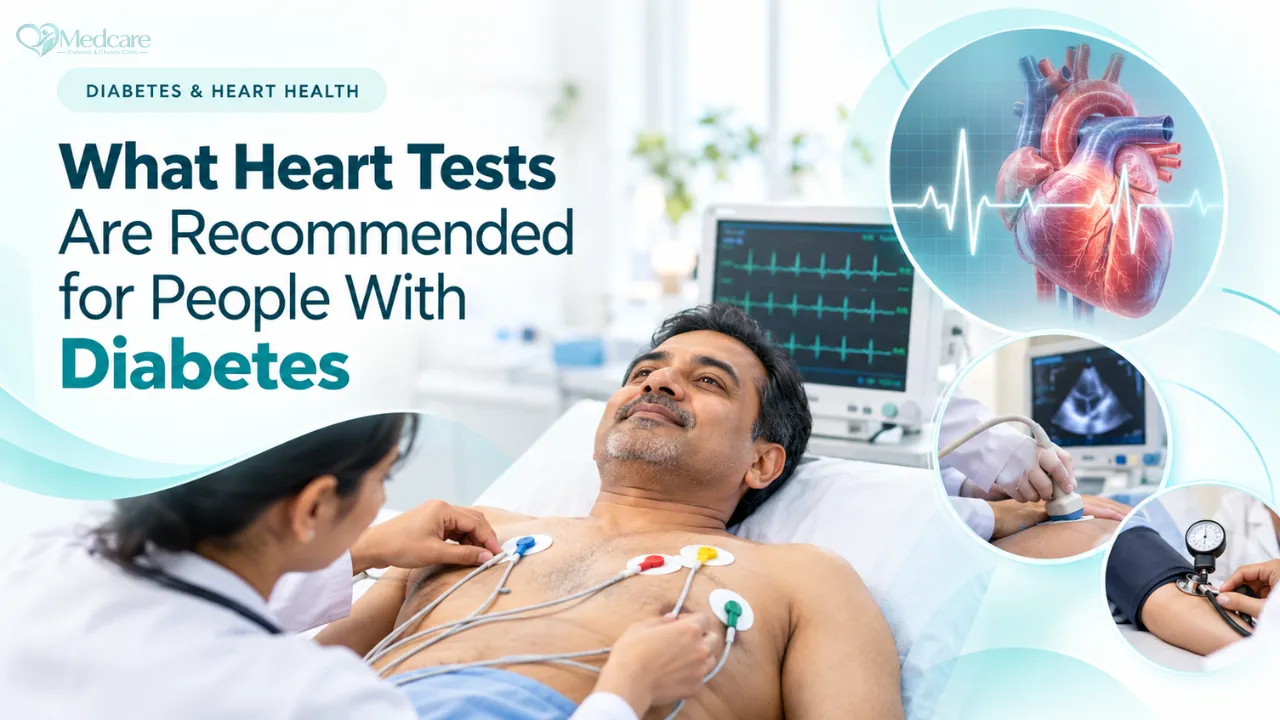
People with diabetes should have regular checks of heart risk factors, including blood pressure, cholesterol, kidney function and HbA1c. An ECG is often done as a baseline. Further tests such as a 2D echo, stress test or CT coronary scan are usually advised based on symptoms, overall risk and examination findings, not for everyone automatically.
Quick answer
- Routine heart-related checks for people with diabetes include BP at every visit, a lipid profile, kidney tests (creatinine and urine albumin), HbA1c and often a baseline ECG.
- Additional tests like 2D echo, stress echo, treadmill test or Holter monitoring may be advised if you have symptoms, an abnormal ECG or high cardiovascular risk.
Routine Checks
Blood pressure
Checked at every visit. Home monitoring may also be advised.
Lipid profile
Measures LDL, HDL, triglycerides and total cholesterol, usually at least once a year.
Kidney tests
Serum creatinine (eGFR) and urine albumin-to-creatinine ratio, usually yearly. Kidney disease is closely linked with heart risk.
HbA1c
Shows average sugar control over two to three months.
Baseline ECG
A quick, painless test that records heart rhythm and can show signs of previous damage or strain.
Tests Based on Symptoms or Risk
2D echocardiogram
An ultrasound of the heart that shows pumping function, valves and wall thickness. Often advised if there is breathlessness, swelling, a heart murmur or long-standing high BP.
Stress test or stress echo
Checks how the heart performs during exercise or medicine-induced stress. May be used for chest discomfort, breathlessness on exertion or abnormal ECG.
Holter monitor
A portable ECG worn for 24 hours or longer to detect rhythm problems if you have palpitations or dizziness.
CT coronary calcium scan or CT angiography
Used in selected people to assess plaque in heart arteries.
Why Not Test Everyone With Every Test?
Testing everyone without symptoms does not always improve outcomes and may lead to unnecessary procedures. Doctors use symptoms, risk scores and examination findings to choose the right tests for each person.
Symptoms That Need Prompt Evaluation
- Chest discomfort or pressure
- Breathlessness on exertion
- Unusual tiredness
- Palpitations
- Swelling in the legs
- Dizziness or fainting
When to Seek Emergency Care
Call emergency services for chest pain lasting more than a few minutes, severe breathlessness, sweating, fainting or pain spreading to the arm, jaw or back.
Key Takeaways
- Regular risk factor checks are essential.
- A baseline ECG is commonly done.
- Echo and stress tests depend on symptoms and risk.
- Kidney tests are part of heart risk assessment.
- Report new symptoms promptly.
Final Thoughts
The right heart tests at the right time help catch problems early without unnecessary procedures. Regular review with your doctor keeps your plan up to date. For diabetes and heart risk assessment, you can consult Dr. Tamoghna Das, an internal medicine and cardio-diabetology specialist at Medcare Diabetes & Obesity Clinic.
This article is part of our guide to diabetes and heart disease risk, written for patients and families in Bongaigaon.
FAQs
Should every person with diabetes get an ECG?
A baseline ECG is commonly done and is quick and painless. Repeat ECGs depend on symptoms, age and risk. Your doctor will advise how often you need one.
When is a 2D echo needed in diabetes?
A 2D echo may be advised if you have breathlessness, leg swelling, a heart murmur, long-standing high BP or an abnormal ECG. It shows how well the heart pumps and how the valves work.
Do I need a stress test if I have no symptoms?
Not always. Routine stress testing in people without symptoms is not recommended for everyone. It may be considered for those with high risk, abnormal ECG or before starting intense exercise.
How often should cholesterol be checked in diabetes?
Usually at least once a year, or more often when starting or adjusting medicines. Your doctor will set the right schedule for you.
Why are kidney tests important for heart health?
Kidney disease and heart disease share risk factors and often occur together. Protein in the urine is also a sign of increased cardiovascular risk. Yearly kidney checks help guide treatment.
Can heart disease be present without symptoms in diabetes?
Yes. Some people with diabetes have heart disease with mild or no symptoms. This is why risk factor control and regular check-ups are important.
Sources

Medically reviewed by Dr. Tamoghna Das, MBBS, MD (Medicine) · Assam Council of Medical Registration No. 20276 · Last reviewed 8 October 2026
Medical disclaimer. This article is for general information only. It is not a diagnosis and is not a substitute for a consultation with a doctor. For advice about your own health, please book an appointment. Read our medical disclaimer.
Seek urgent care now, call 108 or 112, or go to the nearest emergency department if you have chest pain, sudden breathlessness, fainting, weakness on one side of the body, very high blood sugar with vomiting or drowsiness, repeated low blood sugar with confusion, or a foot wound with redness, swelling or fever.