
2D Echo vs ECG: What Is the Difference?
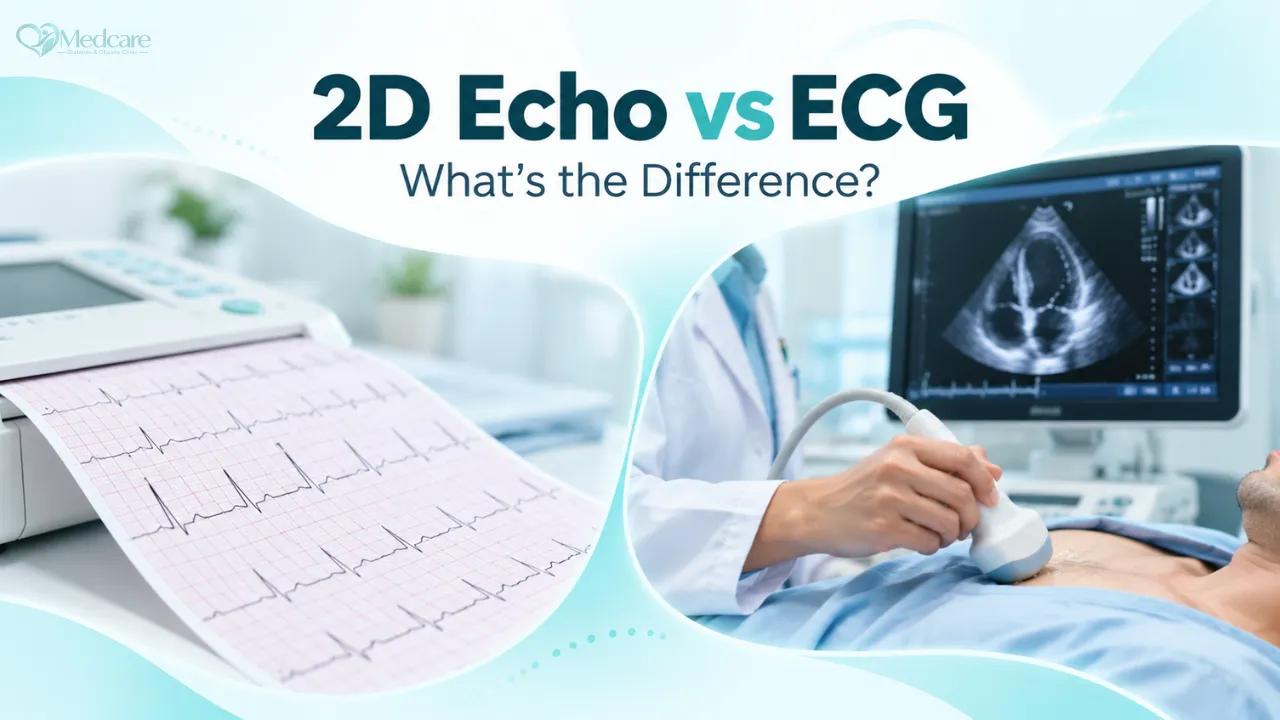
An ECG (electrocardiogram) records the electrical activity of the heart and shows rhythm and signs of strain or damage. A 2D echo (echocardiogram) is an ultrasound scan that shows the heart's structure, size, pumping strength and valves. They answer different questions, so doctors often use them together rather than choosing one over the other.
Quick answer
- Use an ECG to check heart rhythm, rate and signs of a heart attack or strain.
- Use a 2D echo to see how well the heart pumps, check valves, wall thickness and chamber size, and look for fluid around the heart.
- An ECG takes a few minutes.
- An echo takes about 20 to 40 minutes.
- Both are painless and non-invasive.
What Is an ECG?
An ECG uses small sticky electrodes on the chest, arms and legs to record the heart's electrical signals.
What it shows
- Heart rate and rhythm
- Irregular heartbeats such as atrial fibrillation
- Signs of a current or past heart attack
- Thickening of the heart muscle, sometimes
- Electrolyte or medication effects
What it cannot show
- How well the heart pumps
- Valve problems in detail
- Heart structure clearly
What Is a 2D Echo?
A 2D echo uses a probe with gel on the chest to create moving images of the heart using sound waves.
What it shows
- Pumping strength (ejection fraction)
- Size of heart chambers
- Thickness of heart walls
- Valve function, including leaks or narrowing
- Fluid around the heart
- Areas of weak muscle after a heart attack
- Pressure in the lungs, estimated
What it cannot show
- Heart rhythm over time
- Blockages in heart arteries directly
When Is Each Test Used?
ECG is often used for
- Chest pain
- Palpitations
- Dizziness or fainting
- Routine check-ups in diabetes or high BP
- Before surgery
- Monitoring certain medicines
2D echo is often used for
- Breathlessness or leg swelling
- Heart murmurs
- Suspected heart failure
- Long-standing high BP
- After a heart attack
- Valve disease follow-up
- Unexplained fatigue with heart risk factors
Do You Need Both?
Often, yes. An ECG may show a problem that an echo then helps explain, or vice versa. Your doctor decides based on symptoms and risk.
How to Prepare
- No fasting is usually needed for either
- Wear comfortable, two-piece clothing
- Avoid oily creams on the chest
- Bring previous reports
Key Takeaways
- ECG records electrical activity and rhythm.
- 2D echo shows heart structure and pumping.
- They answer different questions.
- Both are painless and safe.
- Doctors often use them together.
Final Thoughts
Understanding what each test shows helps you feel more confident about your heart check-up. The right test at the right time gives clear answers. For ECG and 2D echo evaluation, you can consult Dr. Tamoghna Das, an internal medicine and cardio-diabetology specialist at Medcare Diabetes & Obesity Clinic.
This article is part of our guide to ECG vs 2D echo, written for patients and families in Bongaigaon.
FAQs
Is 2D echo better than ECG?
Neither is better; they show different things. An ECG checks rhythm and electrical activity, while a 2D echo shows structure and pumping. Doctors choose based on your symptoms.
Can an ECG detect heart blockage?
An ECG may show signs of reduced blood supply or a past heart attack, but it cannot directly see blockages in arteries. Tests like stress tests or angiography are used for that.
How long does a 2D echo take?
Most 2D echo tests take about 20 to 40 minutes. You lie on your side while a probe is moved over your chest. It is painless.
Is there any radiation in ECG or echo?
No. ECG records electrical signals, and echo uses sound waves. Neither uses radiation, so both are safe, including for repeated tests.
Can a normal ECG mean my heart is fine?
A normal ECG is reassuring but does not rule out all heart problems. Valve disease, early heart failure or blockages may need other tests. Discuss your symptoms with your doctor.
Do people with diabetes need a 2D echo?
Not everyone. A 2D echo may be advised if you have breathlessness, swelling, long-standing high BP, a murmur or an abnormal ECG. Your doctor will decide.
Sources

Medically reviewed by Dr. Tamoghna Das, MBBS, MD (Medicine) · Assam Council of Medical Registration No. 20276 · Last reviewed 20 October 2026
Medical disclaimer. This article is for general information only. It is not a diagnosis and is not a substitute for a consultation with a doctor. For advice about your own health, please book an appointment. Read our medical disclaimer.
Seek urgent care now, call 108 or 112, or go to the nearest emergency department if you have chest pain, sudden breathlessness, fainting, weakness on one side of the body, very high blood sugar with vomiting or drowsiness, repeated low blood sugar with confusion, or a foot wound with redness, swelling or fever.