
Holter Monitor: What It Detects
Quick answer
- A Holter monitor is a small portable device that records your heart's electrical activity continuously, usually for 24 to 48 hours, while you go about your daily routine.
- It can detect irregular heartbeats (arrhythmias), episodes that a short ECG misses, and heart rhythm changes linked to symptoms such as palpitations, dizziness or fainting.
Why a Holter Instead of a Regular ECG?
A standard ECG records only a few seconds. If your rhythm problem comes and goes, it can be missed. A Holter captures the heart through a full day, including activity, rest and sleep.
What It Can Detect
- Atrial fibrillation and other irregular rhythms.
- Extra beats (ectopic beats) and their frequency.
- Very fast heart rates (tachycardia).
- Very slow heart rates or pauses (bradycardia).
- Heart block.
- Changes in the ECG pattern that may point to reduced blood supply to the heart in some situations.
- The link between symptoms and rhythm, if you note symptoms in a diary.
Who May Need One
- Palpitations or a racing heart.
- Unexplained dizziness, blackouts or near-fainting.
- Unexplained breathlessness or fatigue.
- After a stroke, to look for hidden atrial fibrillation.
- To check the effect of heart medicines.
- People with diabetes and heart risk factors, where the doctor suspects a rhythm problem.
What to Expect
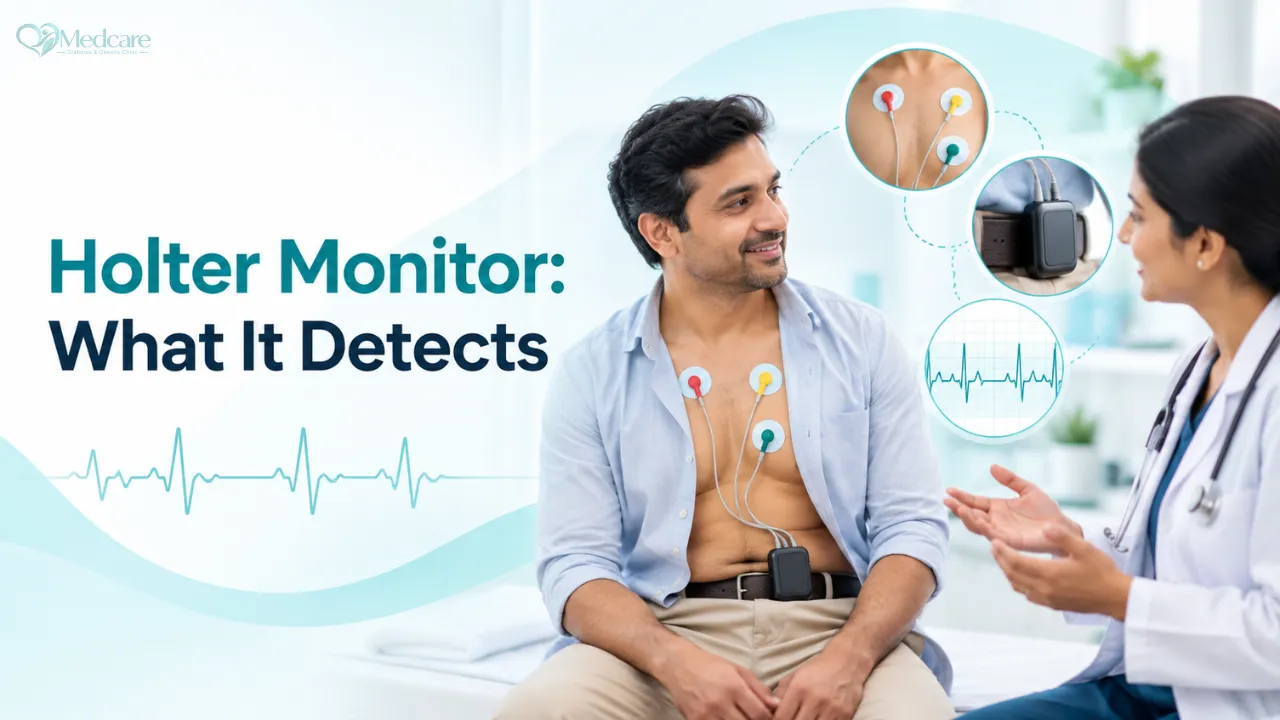
Small sticky electrodes are placed on your chest and connected to the recorder, which you wear on a belt or strap. You continue normal activities. Keep a diary of symptoms and activities with times. Keep the device dry, so avoid bathing or swimming while wearing it. After the recording, the data is analysed by a doctor.
Tips
- Wear loose clothing that allows easy access.
- Do not remove the electrodes during the test.
- Avoid magnets and electric blankets near the device.
- Press the event button if your device has one, when you feel symptoms.
Key Takeaways
- A Holter monitor records the heart rhythm for 24 hours or more.
- It detects rhythm problems that a short ECG may miss.
- A symptom diary improves the value of the test.
- It is painless and safe.
Final Thoughts
When symptoms come and go, longer monitoring can find the answer. Dr. Tamoghna Das, an internal medicine and cardio-diabetology specialist at Medcare Diabetes & Obesity Clinic, can advise whether a Holter test is suitable and explain the results clearly.
This article is part of our guide to ECG vs 2D echo, written for patients and families in Bongaigaon.
FAQs
Is a Holter test painful?
No. The stickers can feel slightly irritating on the skin.
Can I bathe with a Holter?
No. Keep the device dry.
How long is the recording?
Usually 24 to 48 hours, sometimes longer.
Can it detect a heart attack?
It is mainly for rhythm problems. Other tests are used to diagnose heart attacks and blockages.
What if I have no symptoms during the recording?
The test may be normal, and your doctor may suggest repeating or longer monitoring.
Can I exercise while wearing it?
Normal daily activities are encouraged. Avoid sweating heavily if advised.
Sources

Medically reviewed by Dr. Tamoghna Das, MBBS, MD (Medicine) · Assam Council of Medical Registration No. 20276 · Last reviewed 21 October 2026
Medical disclaimer. This article is for general information only. It is not a diagnosis and is not a substitute for a consultation with a doctor. For advice about your own health, please book an appointment. Read our medical disclaimer.
Seek urgent care now, call 108 or 112, or go to the nearest emergency department if you have chest pain, sudden breathlessness, fainting, weakness on one side of the body, very high blood sugar with vomiting or drowsiness, repeated low blood sugar with confusion, or a foot wound with redness, swelling or fever.