What to Do Before an ECG or Echo
Quick answer
- For an ECG or an echocardiogram (echo), you generally do not need to fast or stop your regular medicines unless your doctor says so.
- Wear a comfortable two-piece outfit, avoid heavy creams on the chest, carry your previous reports and medicine list, and stay relaxed.
- Both tests are painless and safe.
What Is an ECG?
An electrocardiogram records the heart's electrical activity using small sticky electrodes placed on the chest, arms and legs. It takes only a few minutes and shows heart rhythm, signs of strain and evidence of a past heart attack.
What Is an Echo?
An echocardiogram uses ultrasound to create moving pictures of the heart. It shows the size of the chambers, how well the heart pumps, and the state of the valves. A gel is applied to the chest and a probe is moved over it. It usually takes 20 to 40 minutes.
How to Prepare
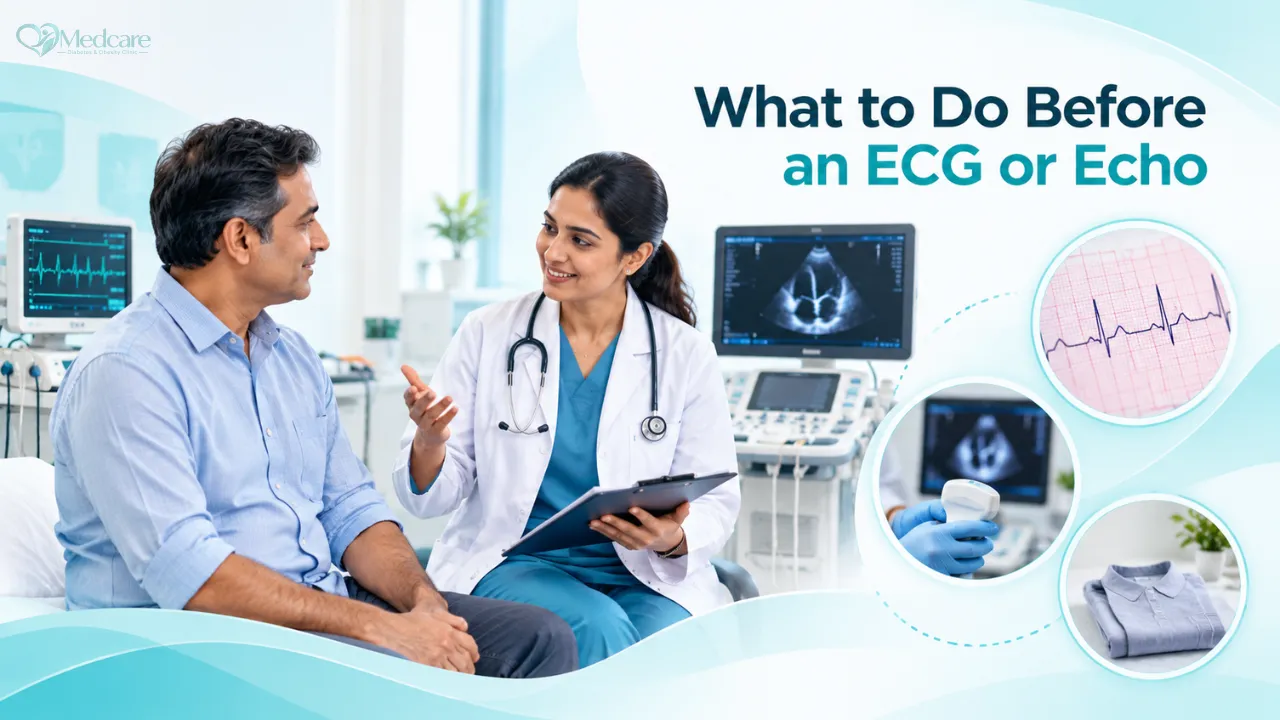
- Clothing: wear a loose top or two-piece clothing that is easy to open at the chest.
- Skin: avoid applying oil, lotion or powder on the chest, as electrodes stick better on clean, dry skin.
- Food and drink: no fasting is usually required for a standard ECG or echo. Eat lightly and avoid caffeine or smoking just before the test if you are told it may affect the reading.
- Medicines: continue your usual medicines unless the doctor instructs otherwise. Carry a list.
- Documents: bring previous ECGs, echo reports and prescriptions to allow comparison.
- Tell the staff: about symptoms, implants such as a pacemaker, and any allergies to adhesives or gel.
- Relax: rest for a few minutes before the test, since anxiety can raise the heart rate.
What Happens During the Test
You lie on a couch. Electrodes or gel are applied. You may be asked to breathe slowly or turn to your side for the echo. There is no pain, and no radiation.
What About Stress Echo or TMT?
These tests need special preparation, such as comfortable shoes and sometimes holding certain medicines. Follow the instructions given by your doctor.
Key Takeaways
- ECG and echo usually need little preparation.
- Wear easy clothing and keep the chest skin clean and dry.
- Carry previous reports and your medicine list.
- Follow special instructions for stress tests.
Final Thoughts
Heart tests are quick, safe and informative. Dr. Tamoghna Das, an internal medicine and cardio-diabetology specialist at Medcare Diabetes & Obesity Clinic, can explain which test you need and what the results mean for your health.
This article is part of our guide to ECG vs 2D echo, written for patients and families in Bongaigaon.
FAQs
Do I need to fast for an ECG or echo?
Usually not, unless your doctor says so.
Is an echo safe?
Yes. It uses sound waves, not radiation.
Can I take my medicines before the test?
Yes, unless advised otherwise.
How long do the tests take?
An ECG takes a few minutes, and an echo about 20 to 40 minutes.
Will I get results immediately?
Often the doctor can explain basic findings the same day.
Can I drive after the test?
Yes, for these standard tests.
Sources

Medically reviewed by Dr. Tamoghna Das, MBBS, MD (Medicine) · Assam Council of Medical Registration No. 20276 · Last reviewed 22 October 2026
Medical disclaimer. This article is for general information only. It is not a diagnosis and is not a substitute for a consultation with a doctor. For advice about your own health, please book an appointment. Read our medical disclaimer.
Seek urgent care now, call 108 or 112, or go to the nearest emergency department if you have chest pain, sudden breathlessness, fainting, weakness on one side of the body, very high blood sugar with vomiting or drowsiness, repeated low blood sugar with confusion, or a foot wound with redness, swelling or fever.