
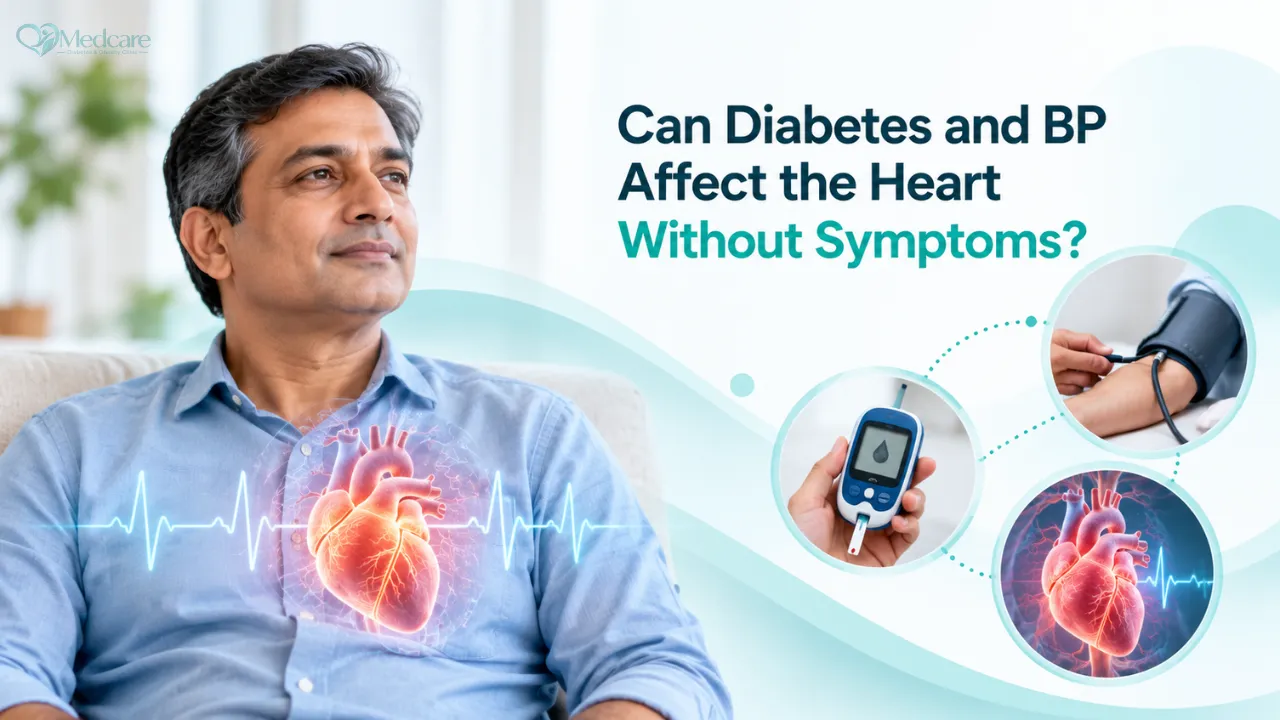
Can Diabetes and High BP Affect the Heart Without Symptoms?
Quick answer
- Yes.
- Diabetes and high blood pressure can damage the heart and blood vessels silently for years before symptoms appear.
- You can feel completely well while arteries narrow, the heart muscle thickens or stiffens, or rhythm problems develop.
- That is why regular check-ups and heart screening are important.
How They Harm the Heart
- High sugar damages the lining of blood vessels and speeds up cholesterol build-up (atherosclerosis).
- High blood pressure makes the heart pump against greater resistance, which can thicken the heart muscle and weaken it over time.
- Together, they multiply the risk of heart attack, heart failure, stroke and kidney damage.
- Nerve damage from diabetes can reduce pain signals, so problems may stay hidden.
Possible Silent Problems
- Narrowed coronary arteries.
- Thickened heart muscle (left ventricular hypertrophy).
- Early heart muscle stiffness or weakness.
- Silent heart attacks.
- Irregular heart rhythms.
Subtle Symptoms Not to Ignore
- Getting breathless on activity that used to be easy.
- Unusual tiredness.
- Swelling in the feet or ankles.
- Palpitations.
- Dizziness.
Tests That Can Detect Problems Early
- Blood pressure checks at every visit, and home monitoring.
- ECG for rhythm and signs of strain or past damage.
- Echocardiogram for heart structure and pumping function.
- Blood tests: lipid profile, kidney function, HbA1c.
- Stress testing or other heart imaging where indicated.
How to Protect Your Heart
- Keep sugar, blood pressure and cholesterol in the target range.
- Take medicines regularly.
- Stay active and eat a balanced, low-salt diet.
- Stop smoking and limit alcohol.
- Manage weight and sleep well.
- Attend regular follow-up even when you feel well.
Key Takeaways
- Heart damage from diabetes and high BP can be silent.
- Regular screening finds problems early.
- Controlling sugar and pressure protects the heart.
- Do not wait for symptoms to check your heart.
Final Thoughts
Feeling well does not always mean the heart is safe. Dr. Tamoghna Das, an internal medicine and cardio-diabetology specialist at Medcare Diabetes & Obesity Clinic, specialises in looking after the heart and diabetes together to prevent complications.
This article is part of our guide to ECG vs 2D echo, written for patients and families in Bongaigaon.
FAQs
Can I have heart disease and feel normal?
Yes. Early heart disease can be silent.
How often should I get my heart checked?
Your doctor will advise based on age, duration of diabetes and risk factors.
Is an ECG enough?
It is a useful start, and other tests may be added.
What is the most important thing I can do?
Keep sugar, BP and cholesterol under control and stay active.
Does salt matter?
Yes, reducing salt helps control blood pressure.
Can lifestyle changes reverse damage?
They can slow or reduce further damage, especially when started early.
Sources

Medically reviewed by Dr. Tamoghna Das, MBBS, MD (Medicine) · Assam Council of Medical Registration No. 20276 · Last reviewed 21 October 2026
Medical disclaimer. This article is for general information only. It is not a diagnosis and is not a substitute for a consultation with a doctor. For advice about your own health, please book an appointment. Read our medical disclaimer.
Seek urgent care now, call 108 or 112, or go to the nearest emergency department if you have chest pain, sudden breathlessness, fainting, weakness on one side of the body, very high blood sugar with vomiting or drowsiness, repeated low blood sugar with confusion, or a foot wound with redness, swelling or fever.