
How Much Salt Is Safe With High Blood Pressure?
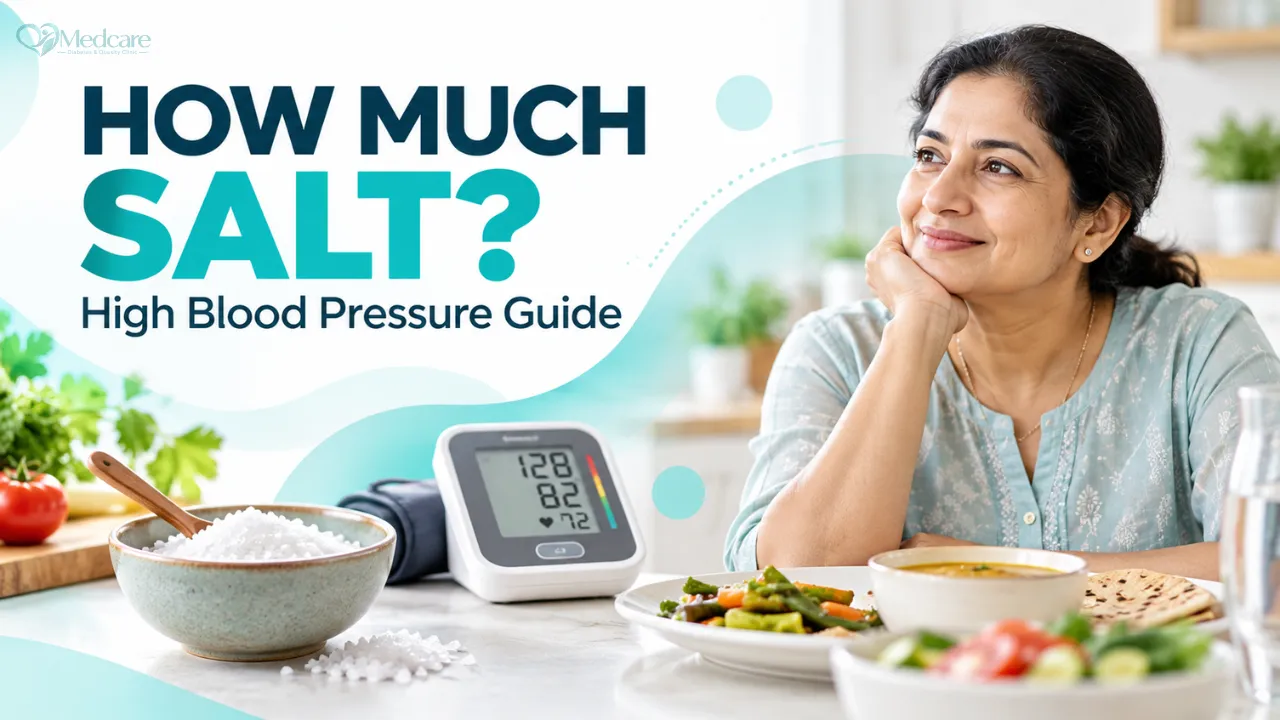
The World Health Organization recommends that adults eat less than 5 grams of salt a day, which is about one level teaspoon in total, including salt already in food. Many Indians eat much more than this, mainly from cooking salt, pickles, papad, snacks and packaged foods. Reducing salt can lower blood pressure and help BP medicines work better.
Quick answer
- Aim for less than 5 g of salt per day, or as advised by your doctor.
- Most salt comes from hidden sources such as pickles, papad, chutneys, namkeen, bread, instant noodles and restaurant food.
- Cutting back gradually, cooking with herbs and spices, and reading food labels can help lower BP within weeks.
Why Does Salt Raise BP?
Salt contains sodium, which makes the body hold more water. This increases the volume of blood and raises pressure on artery walls. Some people, including many with diabetes, kidney disease or older age, are especially sensitive to salt.
Where Does Hidden Salt Come From?
At home
- Extra salt while cooking and at the table
- Pickles and papad
- Chutneys and dry powders
- Salted buttermilk and lassi
- Baking soda in some recipes
Packaged foods
- Namkeen, chips and bhujia
- Instant noodles and soups
- Bread, biscuits and bakery items
- Sauces, ketchup and soy sauce
- Processed meats and cheese
Eating out
Restaurant and street food often contains high salt.
How to Cut Back on Salt
Reduce gradually
Taste buds adjust in a few weeks. Reduce salt slowly so food still tastes good.
Cook smarter
Use lemon, garlic, ginger, coriander, mint, cumin and pepper for flavour.
Limit high-salt foods
Keep pickles and papad occasional, not daily.
Remove the salt shaker
Avoid adding extra salt at the table.
Read labels
Check sodium on packets. Choose lower-sodium options.
Eat more potassium-rich foods
Vegetables, fruits and pulses help balance sodium, unless you have kidney disease and your doctor advises limits.
Be careful with salt substitutes
Some contain potassium and are not safe for people with kidney disease or on certain medicines. Ask your doctor first.
Does Rock Salt or Pink Salt Help?
No. Rock salt, pink salt and sea salt contain similar sodium to regular salt. The amount matters more than the type.
How Soon Will BP Improve?
Many people see a drop in BP within a few weeks of reducing salt, especially when combined with other healthy habits.
Key Takeaways
- Aim for less than 5 g of salt a day.
- Hidden salt is common in Indian foods.
- Pickles, papad and packaged snacks are major sources.
- Herbs and spices add flavour without salt.
- Rock or pink salt is not a healthier alternative.
Final Thoughts
Small changes in salt can lead to meaningful changes in blood pressure. Your taste buds adapt faster than you think. For personalised BP and diet advice, you can consult Dr. Tamoghna Das, an internal medicine and cardio-diabetology specialist at Medcare Diabetes & Obesity Clinic.
This article is part of our guide to high blood pressure, written for patients and families in Bongaigaon.
FAQs
How much salt is one teaspoon?
One level teaspoon of salt is about 5 grams. This is the total daily limit recommended by WHO for adults, including salt already present in foods.
Is rock salt better for blood pressure?
No. Rock salt and pink salt have similar sodium content to regular salt. They do not lower BP. Reducing the total amount of salt is what matters.
Can cutting salt reduce my need for BP medicines?
Reducing salt can lower BP and help medicines work better. Some people may need fewer medicines over time, but never stop or reduce medicines without your doctor's advice.
Are salt substitutes safe?
Many salt substitutes contain potassium. They may help some people but can be dangerous for those with kidney disease or on certain BP medicines. Check with your doctor first.
Which Indian foods are highest in salt?
Pickles, papad, namkeen, chips, instant noodles, chutneys, salted snacks and many restaurant dishes are high in salt. Limiting these makes a big difference.
How long does it take to get used to less salt?
Most people adjust within two to four weeks. Food starts tasting normal again with less salt, especially when you add herbs, spices and lemon.
Sources

Medically reviewed by Dr. Tamoghna Das, MBBS, MD (Medicine) · Assam Council of Medical Registration No. 20276 · Last reviewed 11 October 2026
Medical disclaimer. This article is for general information only. It is not a diagnosis and is not a substitute for a consultation with a doctor. For advice about your own health, please book an appointment. Read our medical disclaimer.
Seek urgent care now, call 108 or 112, or go to the nearest emergency department if you have chest pain, sudden breathlessness, fainting, weakness on one side of the body, very high blood sugar with vomiting or drowsiness, repeated low blood sugar with confusion, or a foot wound with redness, swelling or fever.