How to Check Blood Pressure at Home Correctly
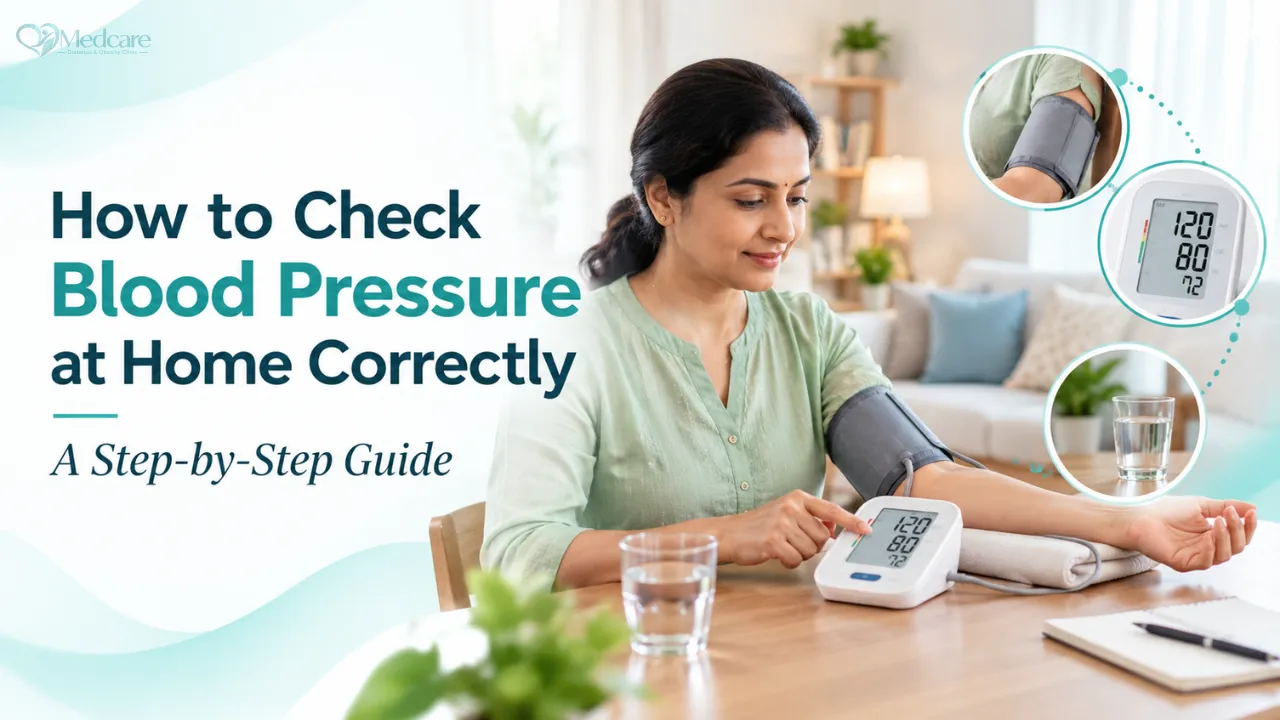
Checking blood pressure at home gives a more accurate picture of your usual BP than a single clinic reading. To get reliable results, use a validated upper-arm digital monitor, sit quietly for five minutes, keep your back supported and feet flat, rest your arm at heart level and take two readings one minute apart. Record them and share with your doctor.
Quick answer
- For accurate home BP: avoid caffeine, smoking and exercise for 30 minutes before, empty your bladder, sit with back supported and feet flat, place the cuff on bare upper arm at heart level, stay silent, take two readings one minute apart, and repeat morning and evening for about a week before your doctor visit.
Choose the Right Monitor
- Use an automatic upper-arm digital monitor
- Choose a clinically validated device
- Avoid wrist and finger monitors unless advised
- Get the right cuff size for your arm; a cuff that is too small gives falsely high readings
Step-by-Step Guide
Step 1: Prepare
- Avoid tea, coffee, smoking and exercise for 30 minutes before
- Empty your bladder
- Sit quietly for five minutes before measuring
Step 2: Position yourself
- Sit on a chair with your back supported
- Keep feet flat on the floor, legs uncrossed
- Rest your arm on a table so the cuff is at heart level
Step 3: Place the cuff
- Wrap the cuff on bare skin, not over clothing
- Place the lower edge about two finger-widths above the elbow crease
- It should be snug but not tight
Step 4: Measure
- Stay still and do not talk
- Press start and wait for the reading
- Wait one minute and take a second reading
Step 5: Record
- Note date, time and both readings
- Many monitors store readings, but a written log is helpful
When to Measure
For a typical home monitoring week:
- Morning: before medicines and breakfast
- Evening: before dinner
- Take two readings each time
- Continue for about 5 to 7 days before your doctor visit
Your doctor may give a different schedule.
Common Mistakes
- Measuring right after walking, eating or bathing
- Talking during the reading
- Arm hanging down or too high
- Wrong cuff size
- Measuring over clothing
- Taking only one reading
When to Call a Doctor
- Readings consistently above your target
- Very high readings, especially with headache, chest pain, breathlessness, confusion or weakness, which need urgent care
- Very low readings with dizziness or fainting
Key Takeaways
- Use a validated upper-arm monitor.
- Rest for five minutes before measuring.
- Keep arm at heart level and stay silent.
- Take two readings each time.
- Record and share readings with your doctor.
Final Thoughts
Good technique turns home BP checks into a powerful tool for managing your health. Accurate readings help your doctor make better treatment decisions. For hypertension care, you can consult Dr. Tamoghna Das, an internal medicine and cardio-diabetology specialist at Medcare Diabetes & Obesity Clinic.
This article is part of our guide to high blood pressure, written for patients and families in Bongaigaon.
FAQs
Which arm should I use to check BP?
At your first visit, the doctor may check both arms. Then use the arm with the higher reading for home checks. Use the same arm consistently.
Are wrist BP monitors accurate?
Wrist monitors are more sensitive to position and can be less accurate. Upper-arm monitors are usually recommended. If you must use a wrist monitor, keep it at heart level.
Why are my home readings different from clinic readings?
Some people have higher readings at the clinic due to anxiety, called white-coat effect. Others have the opposite. Home readings help your doctor understand your true BP.
How often should I check BP at home?
It depends on your situation. Before a review, many doctors suggest twice daily for a week. Once stable, less frequent checks may be enough. Follow your doctor's advice.
Should I take BP before or after medicine?
Morning readings are usually taken before medicines. Your doctor may ask for specific timings to check how well your medicine is working.
What is a normal home BP reading?
Home BP targets are often slightly lower than clinic thresholds. Your doctor will explain your target based on your age and health conditions.
Sources

Medically reviewed by Dr. Tamoghna Das, MBBS, MD (Medicine) · Assam Council of Medical Registration No. 20276 · Last reviewed 10 October 2026
Medical disclaimer. This article is for general information only. It is not a diagnosis and is not a substitute for a consultation with a doctor. For advice about your own health, please book an appointment. Read our medical disclaimer.
Seek urgent care now, call 108 or 112, or go to the nearest emergency department if you have chest pain, sudden breathlessness, fainting, weakness on one side of the body, very high blood sugar with vomiting or drowsiness, repeated low blood sugar with confusion, or a foot wound with redness, swelling or fever.