Resistant Hypertension: Why BP Stays High on Medicines
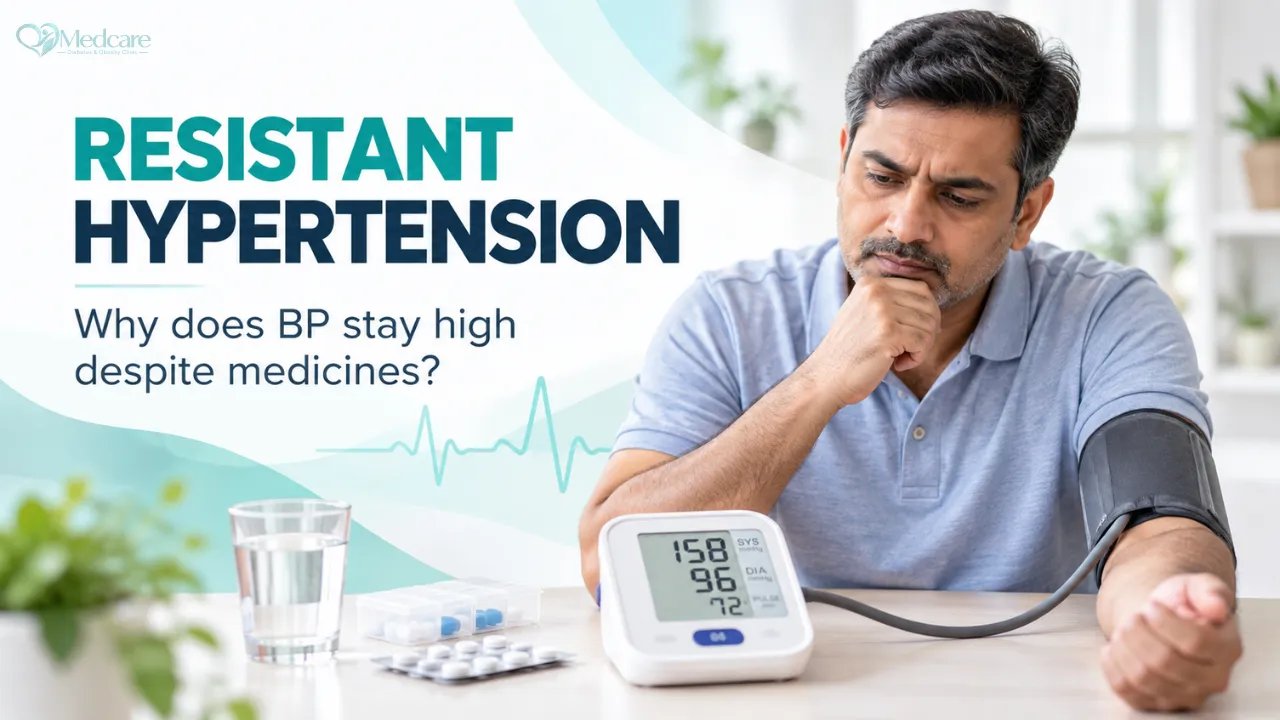
Resistant hypertension is when blood pressure stays above target despite taking three different BP medicines at good doses, usually including a diuretic. It is also used when BP needs four or more medicines to be controlled. Before confirming it, doctors check for common reasons BP may appear resistant, such as missed doses, incorrect measurement or high salt intake.
Quick answer
- BP may stay high because of missed medicines, white-coat effect, high salt intake, excess weight, alcohol, certain medicines such as painkillers, or hidden causes like sleep apnea, kidney disease or hormone problems.
- Doctors confirm true resistant hypertension with home or ambulatory BP monitoring, review medicines and lifestyle, and test for secondary causes.
Pseudo-Resistant Hypertension
Sometimes BP seems resistant but is not:
- Missed or irregular doses: a very common reason
- White-coat effect: high only at the clinic
- Wrong measurement: small cuff or poor technique
- Inadequate doses or combinations
Checking these first avoids unnecessary tests.
Lifestyle Factors
- High salt intake from pickles, papad, namkeen and packaged foods
- Excess weight, especially belly fat
- Regular alcohol use
- Physical inactivity
- Poor sleep
Medicines That Can Raise BP
- Painkillers like NSAIDs
- Decongestant cold medicines
- Steroids
- Some antidepressants
- Oral contraceptives in some women
Tell your doctor about all medicines and supplements you take.
Hidden (Secondary) Causes
Obstructive sleep apnea
Loud snoring, pauses in breathing and daytime sleepiness. A common and often missed cause.
Kidney disease
Damaged kidneys hold more salt and water.
Primary aldosteronism
Excess aldosterone hormone from the adrenal glands, causing salt retention. It is more common than once thought.
Renal artery narrowing
Reduced blood flow to the kidneys.
Thyroid and other hormone problems
Less common but important to consider.
How Is It Investigated?
- Home BP or 24-hour ambulatory monitoring
- Review of medicine adherence and doses
- Blood tests: kidney function, potassium, sugar, thyroid
- Aldosterone and renin levels when indicated
- Urine tests
- Sleep study if sleep apnea is suspected
- Kidney imaging in selected cases
How Is It Treated?
- Treating any secondary cause
- Reducing salt and losing weight
- Limiting alcohol
- Optimising medicines, often adding a fourth medicine such as spironolactone when appropriate
- Treating sleep apnea with CPAP if present
- Regular follow-up
Key Takeaways
- Resistant hypertension is BP above target on three medicines.
- Missed doses and wrong measurement are common reasons.
- Salt, weight and some medicines raise BP.
- Sleep apnea and hormone problems can be hidden causes.
- Proper investigation guides effective treatment.
Final Thoughts
Hard-to-control BP is frustrating, but it often has a cause that can be found and treated. A careful, step-by-step review can bring BP back on track. For specialised hypertension care, you can consult Dr. Tamoghna Das, an internal medicine and cardio-diabetology specialist at Medcare Diabetes & Obesity Clinic.
This article is part of our guide to high blood pressure, written for patients and families in Bongaigaon.
FAQs
What counts as resistant hypertension?
BP that stays above target despite three medicines from different classes, usually including a diuretic, at good doses. It also includes BP controlled only with four or more medicines.
Can sleep apnea cause high BP?
Yes. Obstructive sleep apnea is a common cause of hard-to-control BP. Loud snoring, gasping at night and daytime sleepiness are warning signs. Treatment can help lower BP.
Why does salt matter so much?
Salt makes the body hold water, which raises BP. Many Indian foods like pickles, papad and namkeen are high in salt. Reducing salt can make medicines work better.
Can painkillers raise blood pressure?
Yes. Regular use of NSAID painkillers can raise BP and reduce the effect of BP medicines. Ask your doctor before using them regularly.
What is primary aldosteronism?
It is a condition where the adrenal glands make too much aldosterone, causing salt retention and high BP. It is a treatable cause found with specific blood tests.
Will I need more medicines for resistant hypertension?
Sometimes. Doctors may adjust doses or add another medicine after checking for causes. Treating secondary causes and improving lifestyle may reduce the need for extra medicines.
Sources

Medically reviewed by Dr. Tamoghna Das, MBBS, MD (Medicine) · Assam Council of Medical Registration No. 20276 · Last reviewed 10 October 2026
Medical disclaimer. This article is for general information only. It is not a diagnosis and is not a substitute for a consultation with a doctor. For advice about your own health, please book an appointment. Read our medical disclaimer.
Seek urgent care now, call 108 or 112, or go to the nearest emergency department if you have chest pain, sudden breathlessness, fainting, weakness on one side of the body, very high blood sugar with vomiting or drowsiness, repeated low blood sugar with confusion, or a foot wound with redness, swelling or fever.