Can Sleep Apnea Cause High Blood Pressure?
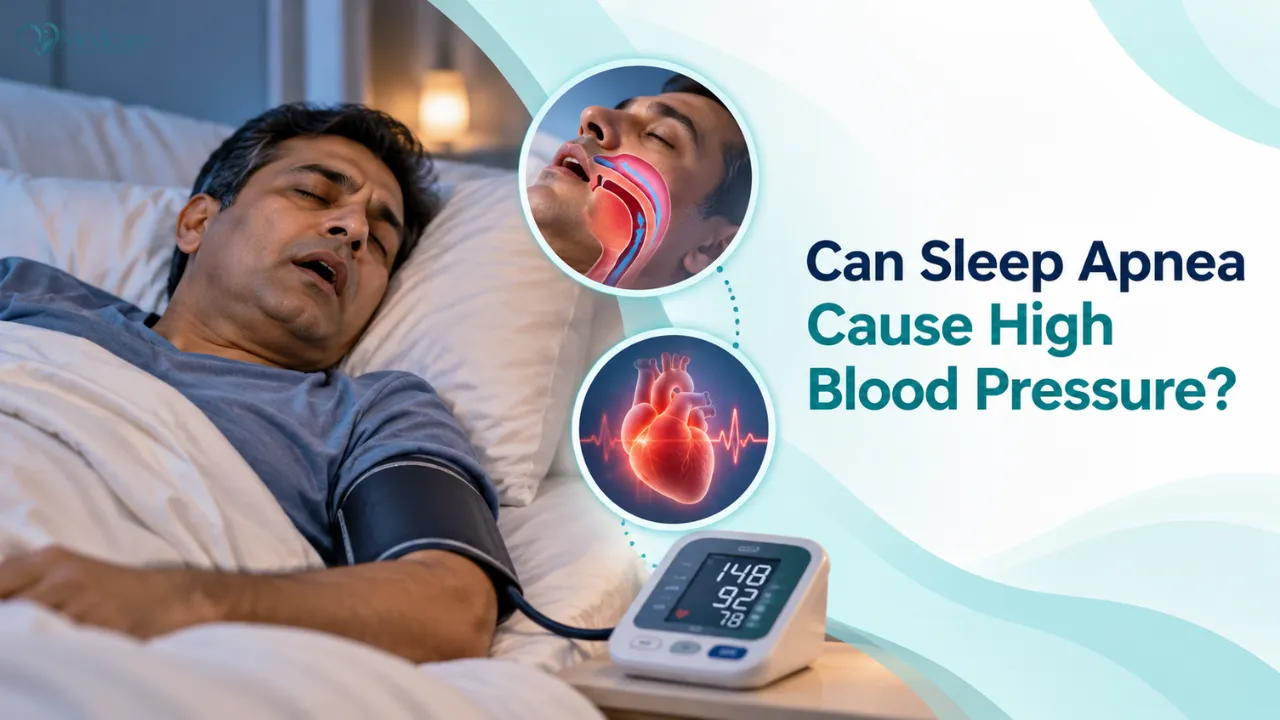
Yes. Obstructive sleep apnea is a well-recognised cause of high blood pressure and is especially common in people whose BP stays high despite medicines. Repeated pauses in breathing during sleep lower oxygen levels and trigger stress responses that raise BP at night and during the day. Treating sleep apnea can help improve blood pressure in many people.
Quick answer
- During sleep apnea, each breathing pause lowers oxygen and activates the body's stress system, releasing adrenaline-like hormones that tighten blood vessels and raise BP.
- Over time, this leads to sustained high BP.
- People with resistant hypertension, high night-time BP, obesity or diabetes should be screened for sleep apnea.
How Does Sleep Apnea Raise BP?
Oxygen drops
Each pause in breathing lowers oxygen levels in the blood.
Stress response
The brain wakes briefly to restart breathing, triggering a surge of stress hormones that raise heart rate and BP.
Blood vessel changes
Repeated surges stiffen blood vessels and impair their ability to relax.
Loss of night-time BP dip
Normally BP falls during sleep. In sleep apnea, it often stays high or rises, which is linked to higher heart risk.
Hormonal effects
Sleep apnea may affect hormones that control salt and fluid balance, further raising BP.
Who Should Be Screened?
- People with resistant hypertension
- Those whose BP is high in the morning or at night
- People with obesity, especially with a large neck
- Those with type 2 diabetes
- People who snore loudly or feel sleepy during the day
- Those with atrial fibrillation or heart failure
How Is It Diagnosed?
- Detailed history and screening questionnaires
- Home sleep test or overnight sleep study (polysomnography)
- 24-hour ambulatory BP monitoring to check night-time BP patterns
Can Treating Sleep Apnea Lower BP?
CPAP therapy can lower BP in many people, particularly those with resistant hypertension and those who use CPAP regularly. The effect varies, and most people still need BP medicines. Weight loss also helps both conditions.
Other Helpful Steps
- Lose excess weight
- Avoid alcohol and sedatives at night
- Sleep on your side
- Reduce salt intake
- Take BP medicines as prescribed
- Attend regular follow-up
Key Takeaways
- Sleep apnea is a common cause of high BP.
- Breathing pauses trigger stress hormone surges.
- Night-time BP often stays high in apnea.
- Screen for apnea in resistant hypertension.
- CPAP and weight loss can help lower BP.
Final Thoughts
If your blood pressure is hard to control, your sleep may hold part of the answer. Diagnosing and treating sleep apnea can improve both rest and heart health. For BP and sleep apnea care, you can consult Dr. Tamoghna Das, an internal medicine and cardio-diabetology specialist at Medcare Diabetes & Obesity Clinic.
This article is part of our guide to sleep apnea and metabolic health, written for patients and families in Bongaigaon.
FAQs
How does sleep apnea affect blood pressure?
Each breathing pause lowers oxygen and triggers stress hormones that raise BP. Over time, this leads to sustained high BP during the day and at night.
Can CPAP lower blood pressure?
Yes, in many people, especially those with resistant hypertension who use CPAP regularly. The reduction varies, and most people still need BP medicines.
Should I be tested for sleep apnea if my BP is high?
Consider testing if your BP is hard to control, you snore loudly, feel sleepy during the day, have obesity or diabetes, or your BP is high at night or in the morning.
What is night-time hypertension?
Normally BP drops during sleep. In night-time hypertension, it stays high or rises. This pattern is common in sleep apnea and linked to higher heart risk.
Can weight loss help both sleep apnea and BP?
Yes. Weight loss can reduce sleep apnea severity and lower blood pressure. Combined with CPAP and medicines, it improves heart health.
Is sleep apnea a cause of resistant hypertension?
Yes. Sleep apnea is one of the most common secondary causes of resistant hypertension. Guidelines recommend screening in people whose BP stays high despite several medicines.
Sources

Medically reviewed by Dr. Tamoghna Das, MBBS, MD (Medicine) · Assam Council of Medical Registration No. 20276 · Last reviewed 17 October 2026
Medical disclaimer. This article is for general information only. It is not a diagnosis and is not a substitute for a consultation with a doctor. For advice about your own health, please book an appointment. Read our medical disclaimer.
Seek urgent care now, call 108 or 112, or go to the nearest emergency department if you have chest pain, sudden breathlessness, fainting, weakness on one side of the body, very high blood sugar with vomiting or drowsiness, repeated low blood sugar with confusion, or a foot wound with redness, swelling or fever.