What Happens During a Sleep Study? A Patient Guide
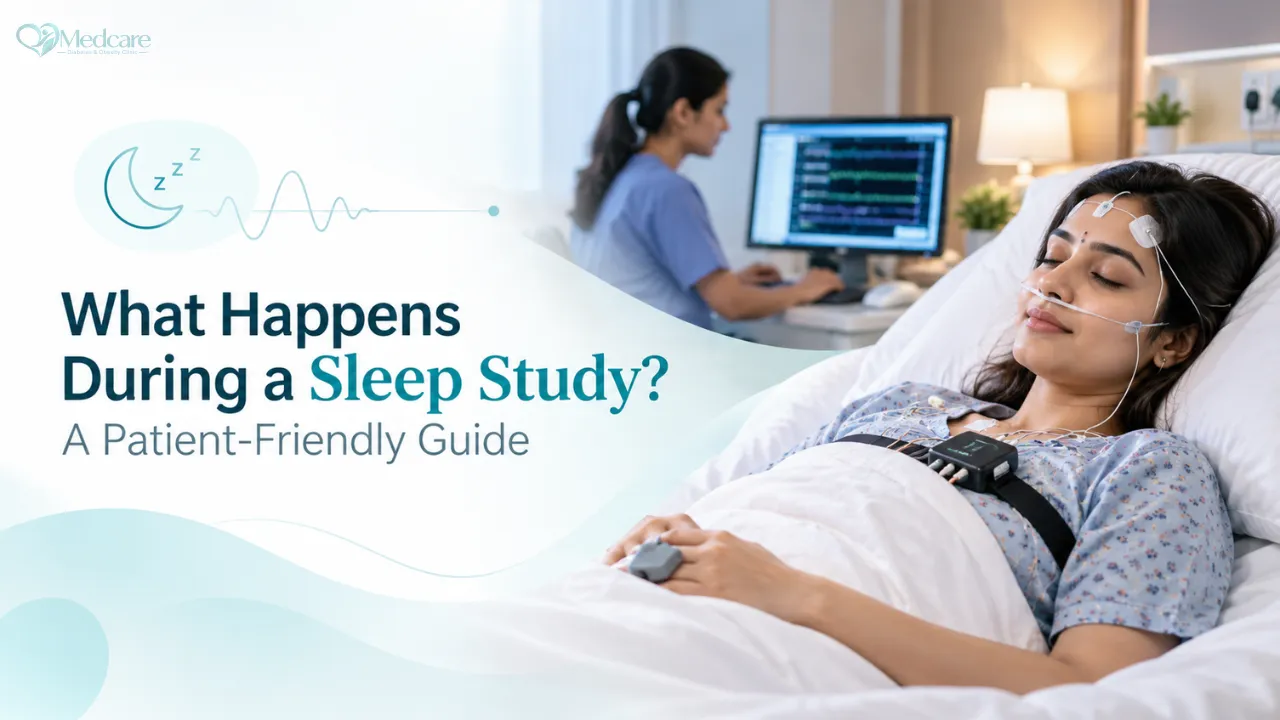
A sleep study is a painless test that records what happens to your body while you sleep. It measures breathing, oxygen levels, heart rate and sometimes brain activity and leg movements. It is the main test used to diagnose sleep apnea. Some studies are done overnight in a sleep lab, while others are done at home with a portable device.
Quick answer
- During a sleep study, small sensors are placed on your body to record breathing, oxygen, heart rate and, in a lab study, brain waves and muscle activity.
- You sleep as normally as possible.
- Results show how many times breathing stops or reduces per hour, called the apnea-hypopnea index (AHI), which helps diagnose and grade sleep apnea.
Types of Sleep Studies
Home sleep apnea test
- Done in your own bed
- Uses a small device with a nasal sensor, chest belt and finger oxygen clip
- Suitable for many adults with suspected moderate to severe sleep apnea
- Convenient and usually lower cost
In-lab polysomnography
- Done overnight in a sleep centre
- Records brain activity, eye movements, muscle activity, breathing, oxygen, heart rhythm and leg movements
- Used when other sleep disorders are suspected or home tests are unclear
What Happens on the Night?
Arrival or setup
You arrive in the evening or receive the device at home with instructions.
Sensors
Small sensors are attached to your scalp, face, chest, legs and finger. They may feel unusual but are painless.
Sleep
You sleep in a comfortable room. A technician monitors you from another room in a lab study.
Morning
Sensors are removed, and you can go home and resume normal activities.
How to Prepare
- Follow your usual routine as much as possible
- Avoid caffeine in the afternoon and evening
- Avoid alcohol on the night of the test
- Wash your hair and avoid oils or gels
- Bring comfortable night clothes and your regular medicines
- Tell the team about medicines that affect sleep
What Do the Results Mean?
The AHI shows how many breathing pauses or reductions happen per hour:
- Normal: fewer than 5
- Mild: 5 to 14
- Moderate: 15 to 29
- Severe: 30 or more
The report also shows oxygen levels, sleep stages and heart rhythm.
What Happens After?
Your doctor will explain the results and discuss treatment, which may include CPAP, weight loss, positional therapy, oral appliances or other options. Sometimes a second night is used to adjust CPAP settings.
Key Takeaways
- A sleep study diagnoses sleep apnea.
- Home tests and lab studies are both used.
- Sensors are painless and non-invasive.
- AHI grades severity.
- Results guide treatment choices.
Final Thoughts
A sleep study may sound strange, but it is simple, painless and gives clear answers. It can be the first step to better sleep and better health. For sleep apnea testing and care, you can consult Dr. Tamoghna Das, an internal medicine and cardio-diabetology specialist at Medcare Diabetes & Obesity Clinic.
This article is part of our guide to sleep apnea and metabolic health, written for patients and families in Bongaigaon.
FAQs
Is a sleep study painful?
No. Sensors are attached with tape or gentle adhesive and do not hurt. Some people find them a little unusual at first, but most are able to sleep.
What if I cannot sleep during the study?
Most people sleep enough for useful results, even if not as well as usual. If not enough sleep is recorded, the study may be repeated.
Can I do a sleep study at home?
Yes. Home sleep apnea tests are suitable for many adults with suspected sleep apnea. Your doctor will decide if a home test or lab study is better for you.
What is AHI?
AHI, or apnea-hypopnea index, is the number of breathing pauses or reductions per hour of sleep. It is used to diagnose and grade sleep apnea as mild, moderate or severe.
Should I take my regular medicines before a sleep study?
Usually yes, unless your doctor advises otherwise. Inform the sleep team about all medicines, especially sleeping pills or sedatives.
How soon will I get results?
Results are usually available within a few days to a week after the study. Your doctor will explain them and discuss treatment options.
Sources

Medically reviewed by Dr. Tamoghna Das, MBBS, MD (Medicine) · Assam Council of Medical Registration No. 20276 · Last reviewed 17 October 2026
Medical disclaimer. This article is for general information only. It is not a diagnosis and is not a substitute for a consultation with a doctor. For advice about your own health, please book an appointment. Read our medical disclaimer.
Seek urgent care now, call 108 or 112, or go to the nearest emergency department if you have chest pain, sudden breathlessness, fainting, weakness on one side of the body, very high blood sugar with vomiting or drowsiness, repeated low blood sugar with confusion, or a foot wound with redness, swelling or fever.