Is Loud Snoring a Sign of Sleep Apnea?
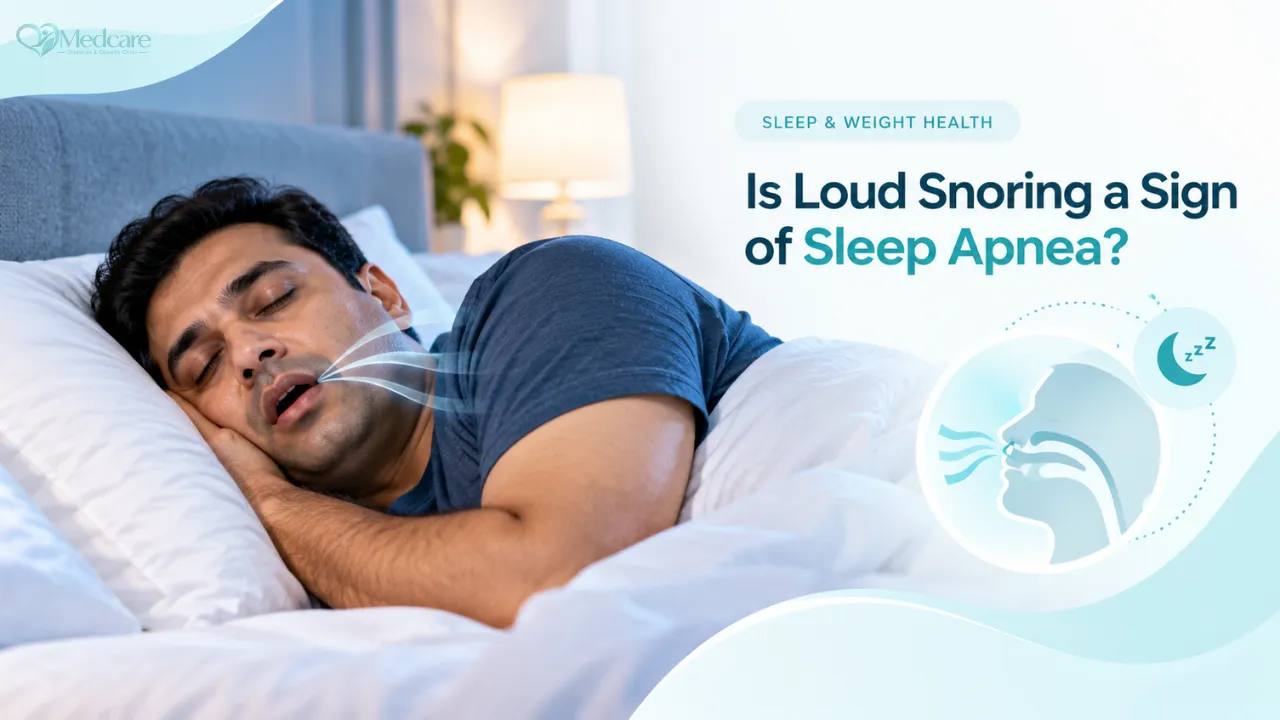
Loud snoring can be a sign of obstructive sleep apnea (OSA), but not everyone who snores has it. Snoring happens when air vibrates soft tissues in the throat. In sleep apnea, the airway repeatedly narrows or closes, causing pauses in breathing, gasping and poor-quality sleep. Snoring with these extra signs, or with daytime sleepiness, should be checked by a doctor.
Quick answer
- Snoring alone may be harmless.
- Snoring is more likely to mean sleep apnea when it is loud and regular, comes with pauses in breathing or choking sounds, and is linked to daytime sleepiness, morning headaches, high BP, obesity or diabetes.
- A sleep study confirms the diagnosis.
Simple Snoring vs Sleep Apnea
Simple snoring
- Occasional or mild
- No pauses in breathing
- No significant daytime tiredness
- Often worse after alcohol or a cold
Sleep apnea
- Loud, frequent snoring
- Pauses in breathing noticed by others
- Gasping or choking during sleep
- Restless sleep and frequent waking
- Daytime sleepiness and tiredness
- Morning headaches or dry mouth
Who Is More at Risk?
- People with obesity or a large neck size
- Men, and women after menopause
- Older adults
- Those with high BP or diabetes
- People with large tonsils or nasal blockage
- Smokers and those who drink alcohol
- Family history of sleep apnea
Why Does It Matter?
Untreated sleep apnea is linked with:
- High blood pressure
- Heart disease and irregular heartbeat
- Stroke
- Type 2 diabetes and poor sugar control
- Daytime accidents due to sleepiness
- Mood changes and memory problems
Simple Screening Questions
Doctors often use simple questionnaires such as STOP-BANG, which asks about:
- Snoring
- Tiredness
- Observed breathing pauses
- High blood pressure
- BMI
- Age
- Neck size
- Gender
A high score suggests further testing.
What Should You Do?
- Ask your partner if they notice breathing pauses
- Note daytime sleepiness or headaches
- Avoid alcohol and sedatives before bed
- Sleep on your side
- See a doctor for evaluation and a sleep study if symptoms suggest apnea
Key Takeaways
- Not all snoring is sleep apnea.
- Breathing pauses and gasping are warning signs.
- Daytime sleepiness strongly suggests apnea.
- Obesity, high BP and diabetes increase risk.
- A sleep study confirms the diagnosis.
Final Thoughts
Loud snoring is often brushed off as a nuisance, but it can signal a condition that affects heart and metabolic health. Getting checked can transform sleep and energy. For sleep apnea assessment, you can consult Dr. Tamoghna Das, an internal medicine and cardio-diabetology specialist at Medcare Diabetes & Obesity Clinic.
This article is part of our guide to sleep apnea and metabolic health, written for patients and families in Bongaigaon.
FAQs
Does everyone who snores have sleep apnea?
No. Many people snore without sleep apnea. It becomes more concerning when snoring is loud, regular and comes with breathing pauses, gasping or daytime sleepiness.
How can I tell if I stop breathing at night?
A bed partner may notice pauses, gasping or choking. Some people wake up suddenly feeling breathless. Recording your sleep sounds or using a sleep study can help.
Can snoring be dangerous?
Simple snoring is usually not dangerous, though it can disturb others. Snoring caused by sleep apnea can be linked to high BP, heart disease and accidents, so it should be evaluated.
Can sleeping on my side reduce snoring?
Yes. Sleeping on your side can reduce snoring and mild apnea in some people. It may not be enough for moderate or severe sleep apnea.
Does alcohol make snoring worse?
Yes. Alcohol relaxes throat muscles, making snoring and apnea worse. Avoiding alcohol for a few hours before bed can help.
When should I see a doctor about snoring?
See a doctor if snoring is loud and frequent, with breathing pauses, gasping, daytime sleepiness, morning headaches or high BP. A sleep study may be recommended.
Sources

Medically reviewed by Dr. Tamoghna Das, MBBS, MD (Medicine) · Assam Council of Medical Registration No. 20276 · Last reviewed 16 October 2026
Medical disclaimer. This article is for general information only. It is not a diagnosis and is not a substitute for a consultation with a doctor. For advice about your own health, please book an appointment. Read our medical disclaimer.
Seek urgent care now, call 108 or 112, or go to the nearest emergency department if you have chest pain, sudden breathlessness, fainting, weakness on one side of the body, very high blood sugar with vomiting or drowsiness, repeated low blood sugar with confusion, or a foot wound with redness, swelling or fever.