
Obesity and Sleep Apnea: Why They Often Go Together
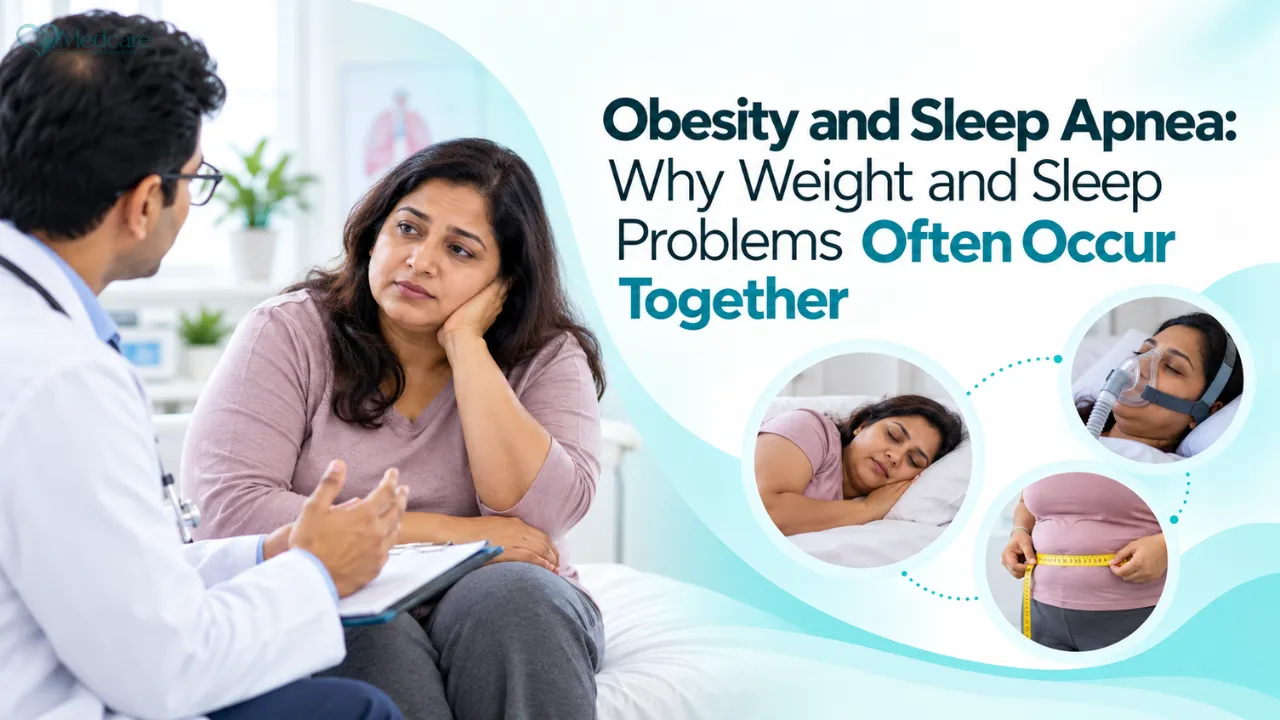
Obesity is one of the strongest risk factors for obstructive sleep apnea (OSA), a condition where the airway repeatedly narrows or closes during sleep. Extra fat around the neck and abdomen makes the airway more likely to collapse. In turn, poor sleep from apnea affects hunger hormones and energy, which can make weight loss harder. Treating one often helps the other.
Quick answer
- Fat around the neck, tongue and abdomen narrows the airway and reduces lung volume, raising sleep apnea risk.
- Sleep apnea causes poor sleep, daytime tiredness and hormonal changes that increase appetite and cravings.
- Weight loss can reduce apnea severity, and treating apnea, often with CPAP, can improve energy and support weight management.
How Does Obesity Cause Sleep Apnea?
- Neck fat: presses on the airway when lying down
- Tongue and throat fat: makes the airway narrower
- Abdominal fat: reduces lung volume and stability of the airway
- Lower muscle tone during sleep: allows the airway to collapse
How Does Sleep Apnea Affect Weight?
- Hunger hormones: poor sleep increases ghrelin (hunger) and lowers leptin (fullness)
- Cravings: more desire for sugary and fatty foods
- Low energy: less motivation for exercise
- Insulin resistance: worsens sugar control
- Stress hormones: may promote fat storage
Warning Signs of Sleep Apnea
- Loud, regular snoring
- Pauses in breathing noticed by a partner
- Waking up gasping or choking
- Morning headaches
- Excessive daytime sleepiness
- Poor concentration or memory
- Waking often to urinate at night
- High BP that is hard to control
Health Risks of Both Together
- High blood pressure
- Type 2 diabetes
- Heart disease and irregular heartbeat
- Stroke
- Fatty liver
- Road accidents due to sleepiness
How Are They Treated?
Weight loss
Even modest weight loss can reduce sleep apnea severity. Larger weight loss may improve it significantly.
CPAP therapy
A machine that keeps the airway open during sleep. It improves sleep quality, energy and may help BP.
Lifestyle changes
Avoid alcohol and sedatives before bed, sleep on your side and keep a regular schedule.
Medical weight-loss options
Some weight-loss medicines may improve sleep apnea in suitable people, under medical supervision.
Other options
Oral appliances or surgery may be considered in selected cases.
When to Get Tested
If you snore loudly and feel sleepy during the day, or your partner notices breathing pauses, ask your doctor about a sleep study.
Key Takeaways
- Obesity is a major risk factor for sleep apnea.
- Sleep apnea can make weight loss harder.
- Snoring and daytime sleepiness are key signs.
- Weight loss and CPAP both help.
- Treating both protects heart and metabolic health.
Final Thoughts
Obesity and sleep apnea create a cycle, but it can be broken. Treating sleep and weight together often brings better energy, health and quality of life. For integrated care, you can consult Dr. Tamoghna Das, an internal medicine and cardio-diabetology specialist at Medcare Diabetes & Obesity Clinic.
This article is part of our guide to obesity treatment, written for patients and families in Bongaigaon.
FAQs
Does losing weight cure sleep apnea?
Weight loss can reduce sleep apnea severity and may resolve mild cases. Some people still need CPAP or other treatment. A repeat sleep study can show how much improvement has occurred.
Can thin people have sleep apnea?
Yes. Jaw shape, large tonsils, nasal blockage and family history can cause sleep apnea in people of normal weight. Anyone with symptoms should be assessed.
Does sleep apnea cause weight gain?
It can contribute. Poor sleep increases hunger hormones and cravings, lowers energy for activity and worsens insulin resistance, all of which can promote weight gain.
Will CPAP help me lose weight?
CPAP itself does not directly cause weight loss, but better sleep can improve energy, mood and appetite control, making it easier to follow a weight plan.
Is snoring always a sign of sleep apnea?
No. Many people snore without apnea. Loud snoring with pauses in breathing, gasping or daytime sleepiness is more suggestive and needs evaluation.
Should people with obesity get a sleep study?
Not everyone, but people with obesity who snore, feel very sleepy, have morning headaches or have hard-to-control BP should ask their doctor about a sleep study.
Sources

Medically reviewed by Dr. Tamoghna Das, MBBS, MD (Medicine) · Assam Council of Medical Registration No. 20276 · Last reviewed 15 October 2026
Medical disclaimer. This article is for general information only. It is not a diagnosis and is not a substitute for a consultation with a doctor. For advice about your own health, please book an appointment. Read our medical disclaimer.
Seek urgent care now, call 108 or 112, or go to the nearest emergency department if you have chest pain, sudden breathlessness, fainting, weakness on one side of the body, very high blood sugar with vomiting or drowsiness, repeated low blood sugar with confusion, or a foot wound with redness, swelling or fever.