Sleep Apnea Symptoms: Sleepiness, Headaches and Gasping
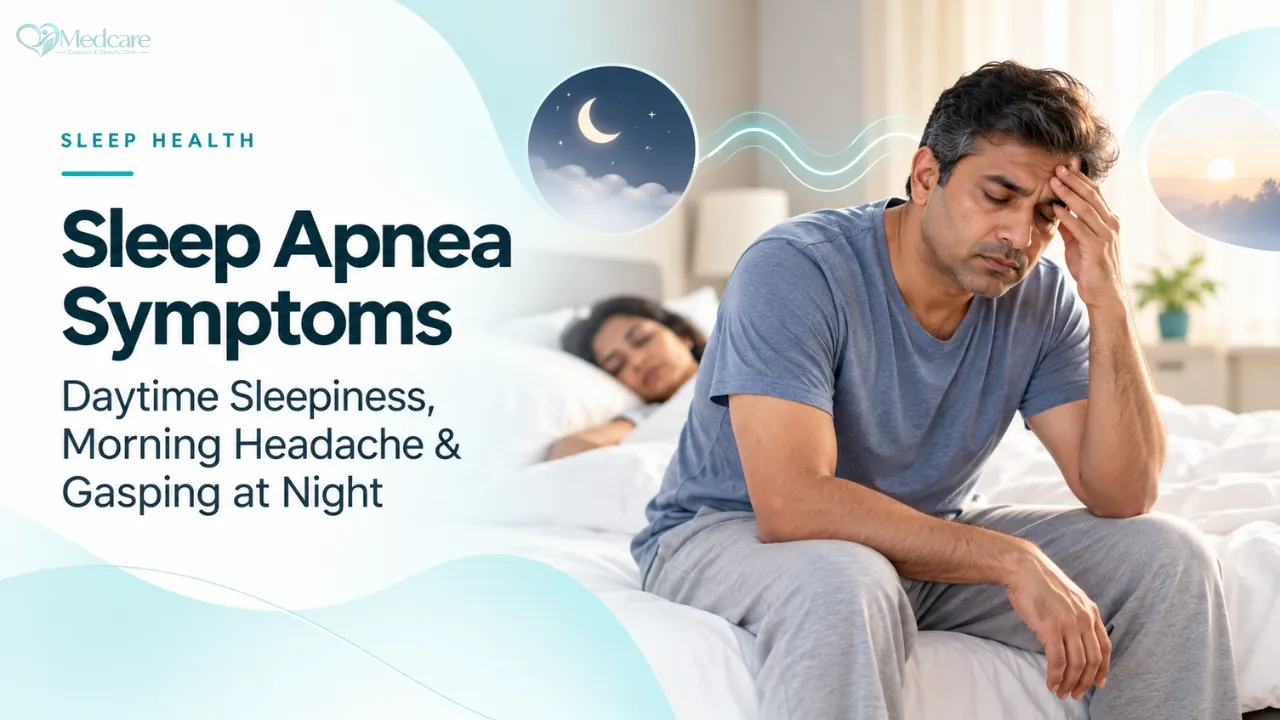
Obstructive sleep apnea causes symptoms both at night and during the day. At night, people may snore loudly, stop breathing for short periods and wake up gasping. During the day, they often feel very sleepy, wake with headaches and struggle to concentrate. Many people do not realise they have it because the night-time symptoms happen while they are asleep.
Quick answer
- Common sleep apnea symptoms include loud snoring, breathing pauses, gasping or choking at night, frequent night urination, morning headaches, dry mouth, excessive daytime sleepiness, poor concentration, irritability and high blood pressure that is hard to control.
- If you have several of these, ask your doctor about a sleep study.
Night-Time Symptoms
- Loud, regular snoring
- Pauses in breathing noticed by a partner
- Waking up gasping or choking
- Restless sleep and tossing
- Night sweats
- Waking often to urinate
- Dry mouth or sore throat on waking
Daytime Symptoms
- Excessive sleepiness during the day
- Falling asleep while reading, watching TV or driving
- Morning headaches
- Poor concentration and memory
- Irritability or low mood
- Low energy and motivation
- Reduced sex drive
Symptoms in Women
Women may have less obvious snoring and more symptoms like insomnia, fatigue, headaches and mood changes. Sleep apnea in women is often missed.
Linked Health Problems
- High blood pressure, especially if hard to control
- Type 2 diabetes or poor sugar control
- Irregular heartbeat such as atrial fibrillation
- Heart failure
- Obesity
- Fatty liver
Why Do These Symptoms Happen?
When the airway closes during sleep, oxygen levels drop and the brain briefly wakes you to restart breathing. This can happen many times an hour, preventing deep, restful sleep. The repeated drops in oxygen and stress responses also strain the heart and blood vessels.
When Is It Urgent?
Falling asleep while driving or during important tasks is dangerous. If this happens, avoid driving and seek medical advice promptly.
What Should You Do?
- Note your symptoms and ask your partner about night-time observations
- See a doctor for screening
- Ask about a sleep study
- Avoid alcohol and sedatives before bed
- Work on weight management if needed
Key Takeaways
- Sleep apnea has night and daytime symptoms.
- Gasping and breathing pauses are key night signs.
- Daytime sleepiness and morning headaches are common.
- Women may have less typical symptoms.
- A sleep study confirms the diagnosis.
Final Thoughts
Feeling tired all the time is not something you have to accept. Recognising sleep apnea symptoms can lead to treatment that restores energy and protects your heart. For sleep apnea evaluation, you can consult Dr. Tamoghna Das, an internal medicine and cardio-diabetology specialist at Medcare Diabetes & Obesity Clinic.
This article is part of our guide to sleep apnea and metabolic health, written for patients and families in Bongaigaon.
FAQs
What is the most common sign of sleep apnea?
Loud snoring with pauses in breathing is the most common sign. Daytime sleepiness is another key symptom. Many people are unaware of night-time symptoms until a partner notices.
Can sleep apnea cause morning headaches?
Yes. Low oxygen and high carbon dioxide levels during the night can cause headaches on waking. These often improve once sleep apnea is treated.
Why do I wake up often to urinate at night?
Sleep apnea can trigger hormonal changes that increase night-time urine production. Frequent night urination can be a sign of sleep apnea, though other causes should also be checked.
Is it dangerous to feel sleepy while driving?
Yes. Drowsy driving increases the risk of accidents. If you feel sleepy while driving, stop safely and seek medical advice about possible sleep apnea.
Can sleep apnea affect mood?
Yes. Poor sleep can cause irritability, low mood and anxiety. Many people notice better mood and concentration after treatment.
Do women get sleep apnea?
Yes. Women can have sleep apnea, especially after menopause or with obesity. Symptoms may be less typical, such as fatigue, insomnia or headaches, so it is often missed.
Sources

Medically reviewed by Dr. Tamoghna Das, MBBS, MD (Medicine) · Assam Council of Medical Registration No. 20276 · Last reviewed 16 October 2026
Medical disclaimer. This article is for general information only. It is not a diagnosis and is not a substitute for a consultation with a doctor. For advice about your own health, please book an appointment. Read our medical disclaimer.
Seek urgent care now, call 108 or 112, or go to the nearest emergency department if you have chest pain, sudden breathlessness, fainting, weakness on one side of the body, very high blood sugar with vomiting or drowsiness, repeated low blood sugar with confusion, or a foot wound with redness, swelling or fever.